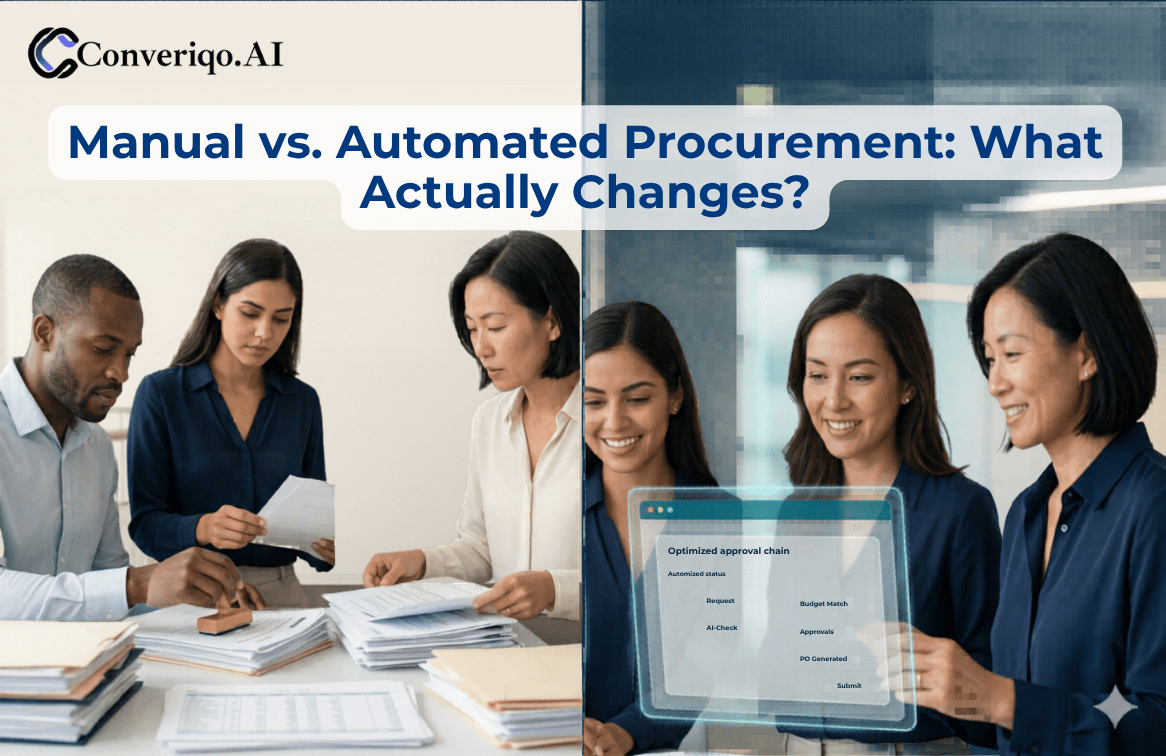
Most procurement teams do not feel the cost of manual procurement in one dramatic moment.
They feel it in daily friction.
A request arrives with missing details.
An approver does not respond.
A preferred vendor is bypassed.
A purchase order is delayed.
An invoice does not match.
Someone has to chase the next step manually.
That is how procurement becomes slow, opaque, and expensive to operate.
This is why the real comparison between manual procurement and procurement automation is not theoretical. It is operational.
Manual procurement depends on people remembering the process.
Automated procurement builds the process into the workflow.
That changes how teams handle:
-
requisitions
-
approvals
-
sourcing
-
purchase-order lifecycle
-
contracts
-
invoice matching
-
compliance controls
-
spend visibility
-
supplier governance
What manual procurement usually looks like
Manual procurement often relies on a combination of email, spreadsheets, shared folders, ad hoc approvals, offline policy checks, and disconnected systems.
It may work for low-volume environments.
It usually starts breaking when:
-
procurement demand increases
-
spend categories diversify
-
multiple approval layers appear
-
supplier risk and compliance requirements grow
-
finance and audit controls tighten
-
the business expects faster turnaround
What procurement automation changes
Procurement automation standardizes intake, routes approvals, supports policy enforcement, tracks POs, improves contract visibility, and helps manage invoice exceptions earlier.
Instead of chasing work manually, teams can move work through a structured workflow with better visibility and accountability.
1. Requisition quality improves
Manual requests often arrive incomplete.
Automated requisitions force structure: category, amount, purpose, budget, supplier, documents, and policy context.
2. Approval delays reduce
Manual approvals get lost in inboxes and chat messages.
Automation routes approvals by threshold, department, or rule, while making bottlenecks visible.
3. Policy compliance becomes more consistent
Manual procurement depends heavily on people remembering policy.
Automated procurement can embed budget checks, preferred suppliers, and exception paths directly in the workflow.
4. Sourcing becomes easier to manage
RFQ and RFP coordination becomes more structured, making supplier bidding and comparison less chaotic.
5. PO tracking gets clearer
Automated PO workflows make it easier to track issuance, status, and follow-up across the procurement lifecycle.
6. Invoice and matching errors are easier to catch
Manual matching across PO, GRN, and invoice is slow and error-prone.
Automation supports three-way matching and exception handling earlier.
7. Auditability improves
Manual procurement creates fragmented records.
Automation creates a more consistent trail across approvals, workflow actions, changes, and exceptions.
8. Spend visibility improves earlier
Manual reporting often shows issues after the spend has happened.
Automation helps procurement and finance monitor process, policy, and spend patterns more proactively.
Where manual procurement becomes expensive
The cost of manual procurement is not just labor.
It also appears as:
-
slower buying cycles
-
missed discounts or sourcing opportunities
-
avoidable leakage
-
compliance risk
-
extra exception handling
-
vendor friction
-
lower team productivity
When manual procurement still survives
Manual procurement survives longest in small teams with low complexity.
But once approval depth, supplier volume, or governance requirements grow, manual coordination becomes harder to scale.
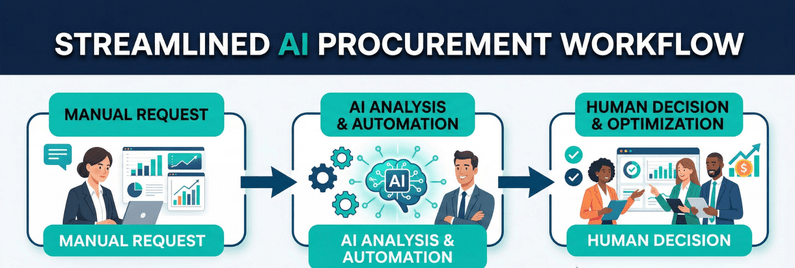
What good procurement automation should improve first
The best first wins usually come from:
-
structured requisitions
-
approval workflow automation
-
guided buying and policy controls
-
PO visibility
-
three-way matching automation
-
spend and exception analytics
Conclusion
Manual procurement is not just slower. It is harder to control, harder to audit, and harder to scale.
Procurement automation changes that by turning scattered steps into governed workflows.
See Procurement Workflow Automation
FAQ
What is the difference between manual procurement and procurement automation?
Manual procurement depends on human coordination across emails, spreadsheets, and offline steps. Procurement automation uses structured workflows, policy rules, and system-driven routing to reduce delays and improve control.
Does procurement automation replace procurement teams?
No. It reduces manual workload and improves workflow execution so procurement teams can focus more on control, supplier strategy, and decision-making.
What is the biggest benefit of procurement automation?
For many teams, it is a combination of faster cycle time, stronger compliance, better spend visibility, and fewer manual bottlenecks.
About the Author
Tanishka Raina
Ready to orchestrate your AI future?
Converiqo AI helps you design, deploy, and scale automation workflows that move your business faster, leveraging specialized solutions like our AI bot platform for lead generation, customer self-service AI bot platform, employee self-service AI bot platform, retail omnichannel automation, and our detailed guides on how agentic AI bot platforms work in enterprises and cost structure of enterprise AI bot platforms. Connect with our team to see the platform in action and co-create the next chapter of intelligent operations.
Read More Blogs
Discover more insights and product updates curated by the Converiqo AI team.

Real ROI of Field Force Automation - Beyond the Activity Dashboard
Four metrics that show real field force automation ROI in India - productivity, data reliability, throughput, and field attrition - not just the activity dashboard.

Beat Planning Is the Highest-Leverage Field Force Capability - Here Is Why
Beat planning decides coverage, call frequency, and whether field time is productive. Why it is the single highest-leverage field force automation capability.
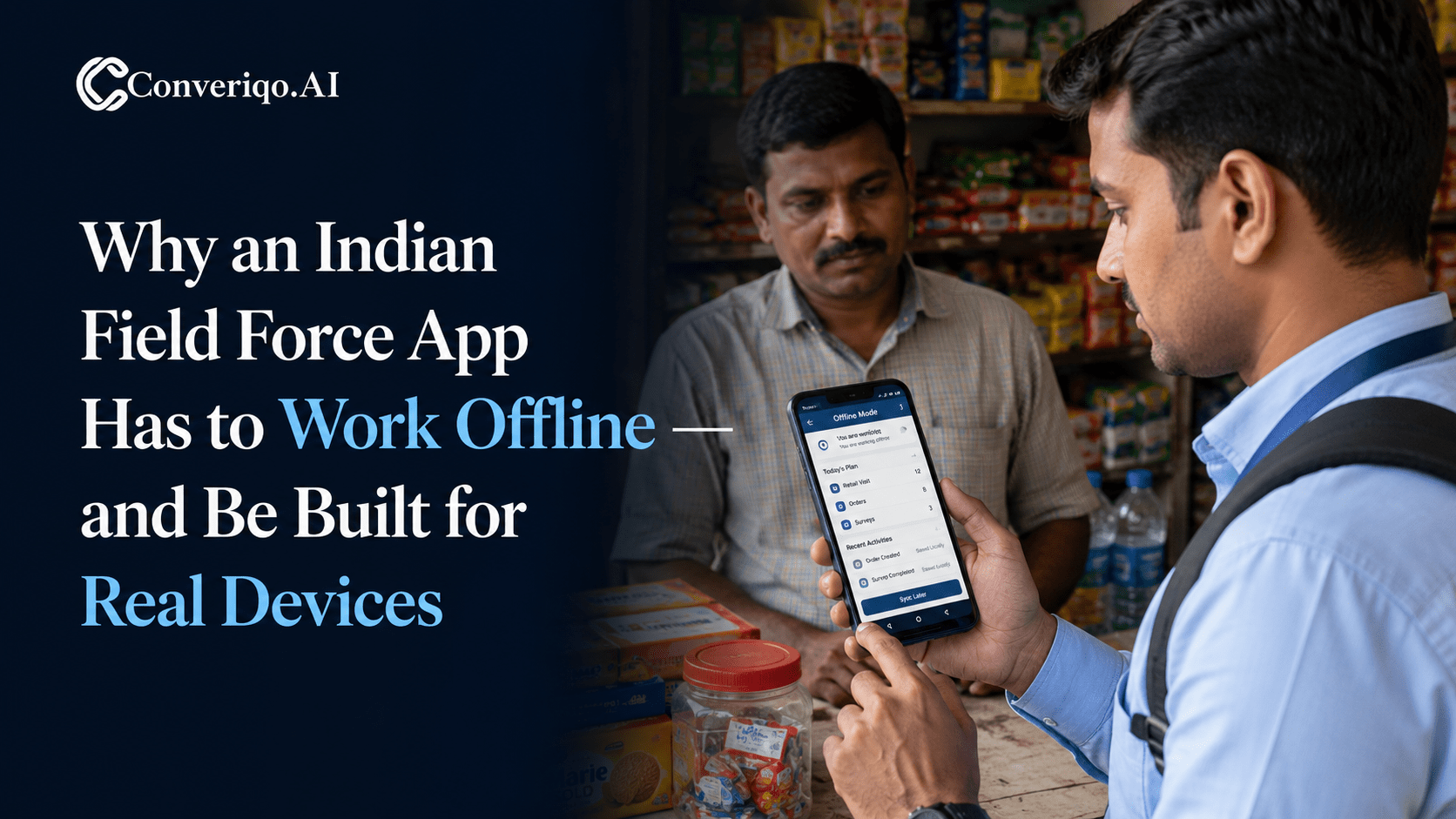
Why an Indian Field Force App Has to Work Offline - and Be Built for Real Devices
Field work in India happens where connectivity is intermittent. A field force app that assumes constant connectivity fails exactly where field work is done.