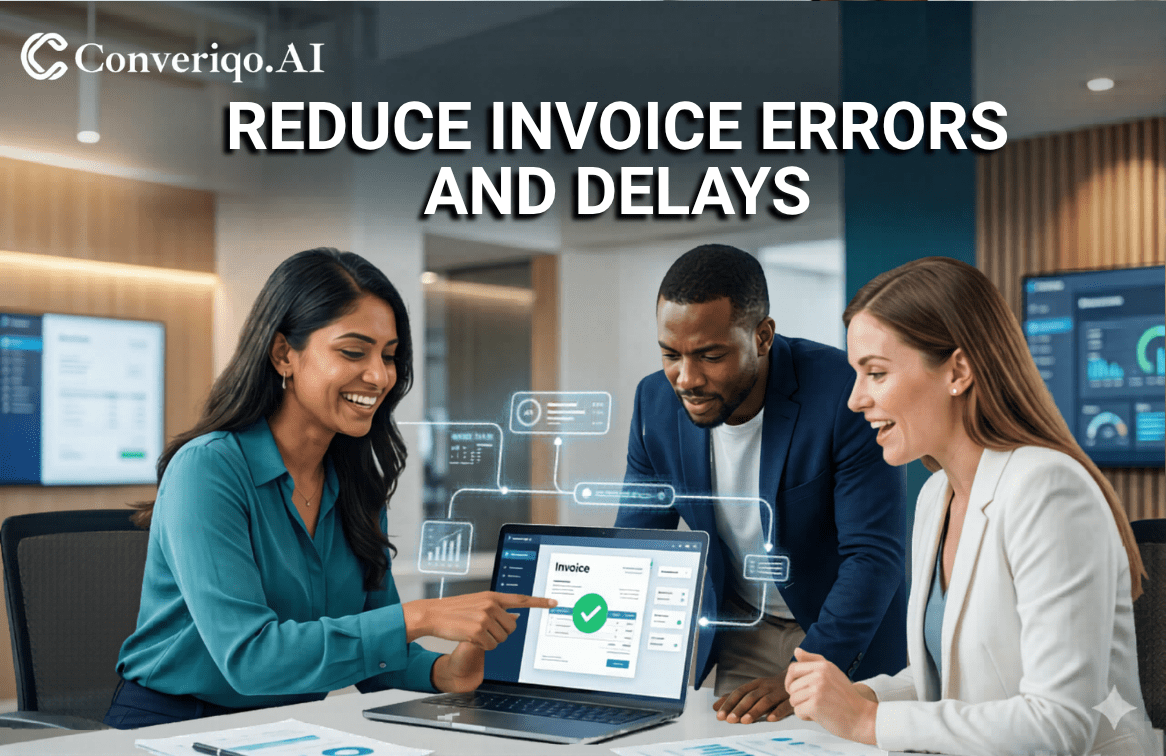
Three-way matching sounds like a finance control.
In practice, it is also a procurement workflow problem.
When purchase orders, goods receipts, and supplier invoices do not line up cleanly, teams lose time in follow-up loops, payment delays, and exception handling.
This is why three-way matching automation matters.
It helps teams compare the PO, GRN, and invoice faster, flag discrepancies earlier, and reduce manual review effort.
What three-way matching does
Three-way matching compares:
- the purchase order
- the goods receipt note
- the supplier invoice
The purpose is to confirm that:
- the ordered goods or services match what was received
- the invoice matches the agreed purchase details
- payment is not being made against incorrect or incomplete records
Why manual matching breaks down
Manual matching becomes difficult when:
- invoice volume is high
- documentation is fragmented
- PO discipline is inconsistent
- goods receipt records are delayed
- teams rely on email and spreadsheet reconciliation
- exception workflows are unclear
That leads to:
- payment delays
- duplicate risk
- disputes with suppliers
- heavier AP workload
- higher control risk
What automation improves
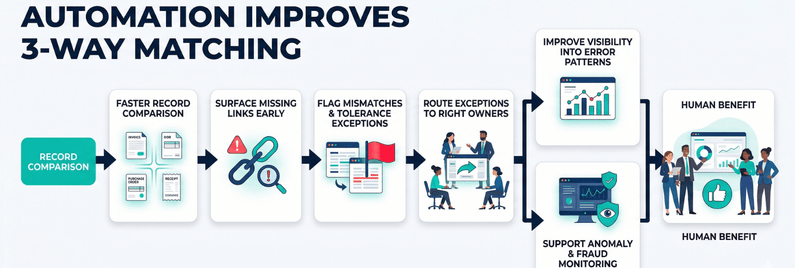
Three-way matching automation can:
- compare records faster
- surface missing links earlier
- flag mismatches and tolerance exceptions
- route exceptions to the right owners
- improve visibility into error patterns
- support anomaly and fraud monitoring
What AI can add
AI can help detect suspicious patterns, recurring discrepancy types, likely duplicate issues, and unusual invoice or approval behavior.
That makes the process more than a back-office check. It becomes a stronger control layer.
Why procurement should care
Invoice mismatch is not just an accounts-payable issue.
It often reflects upstream procurement weaknesses such as poor PO discipline, inconsistent supplier processes, receiving issues, and weak workflow visibility.
Improving three-way matching helps procurement, finance, and supplier operations together.
Conclusion
If invoice exceptions consume too much team time, the fix is not more follow-up.
It is a better workflow and stronger matching control.
See Three-Way Matching Automation
FAQ
What is three way matching in procurement?
Three way matching is the process of comparing the purchase order goods receipt and supplier invoice to ensure accuracy before payment is made.
Why is three way matching important?
It helps prevent incorrect payments detect discrepancies and reduce fraud risk by ensuring all records match before processing invoices.
What causes mismatches in three way matching?
Mismatches often occur due to incorrect purchase orders delayed goods receipt updates inconsistent documentation or supplier invoice errors.
How does automation improve three way matching?
Automation speeds up comparison flags discrepancies early routes exceptions automatically and reduces manual reconciliation effort.
Can AI help detect fraud in invoice processing?
Yes AI can identify unusual patterns duplicate invoices and suspicious approval behavior helping teams detect risks earlier.
About the Author
Tanya Singhal
Ready to orchestrate your AI future?
Converiqo AI helps you design, deploy, and scale automation workflows that move your business faster, leveraging specialized solutions like our AI bot platform for lead generation, customer self-service AI bot platform, employee self-service AI bot platform, retail omnichannel automation, and our detailed guides on how agentic AI bot platforms work in enterprises and cost structure of enterprise AI bot platforms. Connect with our team to see the platform in action and co-create the next chapter of intelligent operations.
Read More Blogs
Discover more insights and product updates curated by the Converiqo AI team.

Real ROI of Field Force Automation - Beyond the Activity Dashboard
Four metrics that show real field force automation ROI in India - productivity, data reliability, throughput, and field attrition - not just the activity dashboard.

Beat Planning Is the Highest-Leverage Field Force Capability - Here Is Why
Beat planning decides coverage, call frequency, and whether field time is productive. Why it is the single highest-leverage field force automation capability.
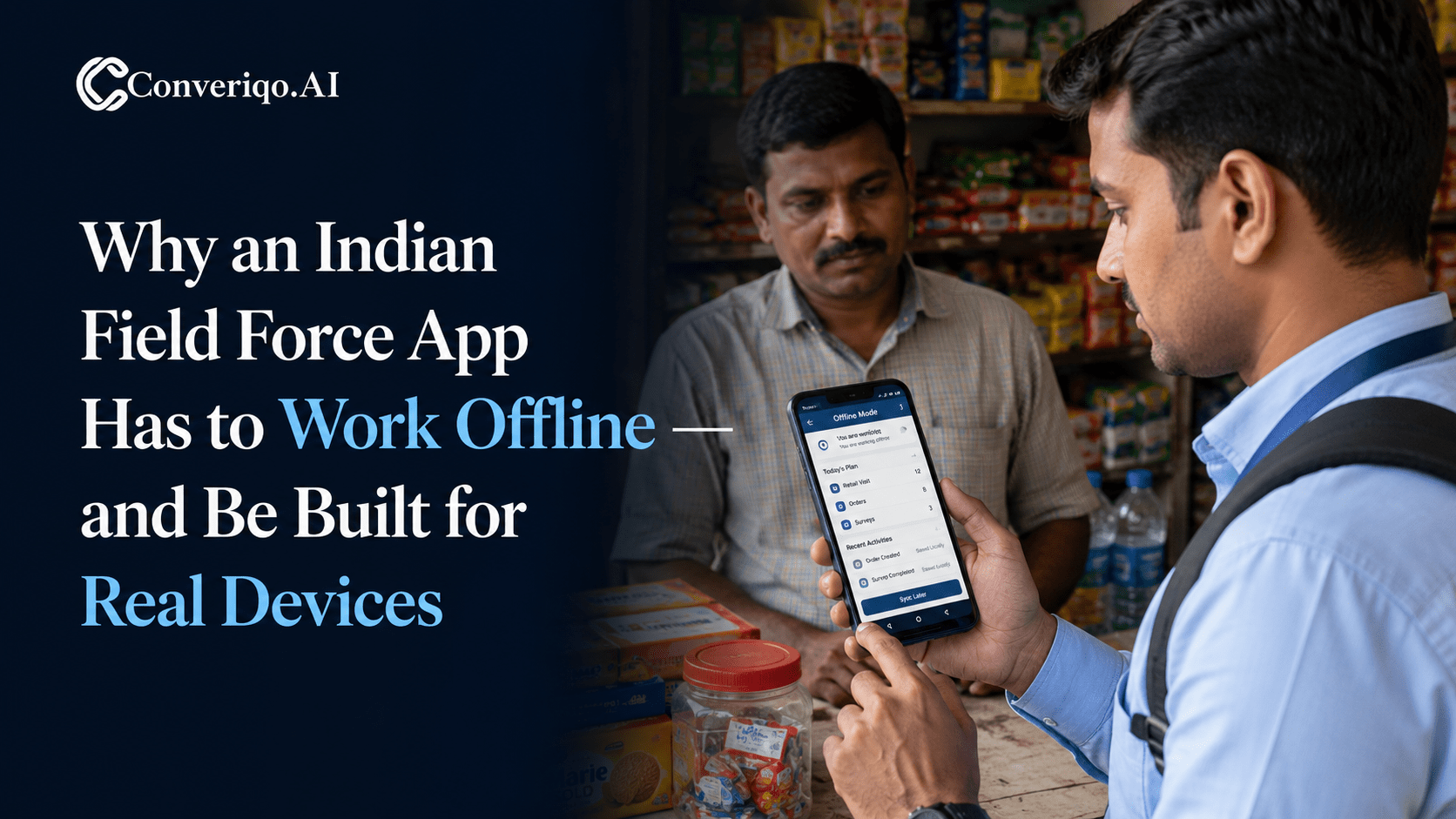
Why an Indian Field Force App Has to Work Offline - and Be Built for Real Devices
Field work in India happens where connectivity is intermittent. A field force app that assumes constant connectivity fails exactly where field work is done.