A lot of businesses assume that if a lead contacted them, the hardest part is done.
It usually is not.
The inquiry is only the opening.
Revenue is won or lost in the minutes, hours, and follow-up steps that come next.
This is why businesses can have:
-
healthy ad spend
-
consistent inbound traffic
-
plenty of WhatsApp messages
-
multiple daily enquiries
-
even strong product-market demand
…and still complain that conversions feel weak.
The problem is often not lack of interest.
The problem is what happens immediately after the first inquiry.
That is where high-intent leads go cold.
Not because the buyer stopped caring.
Because the business failed to keep momentum.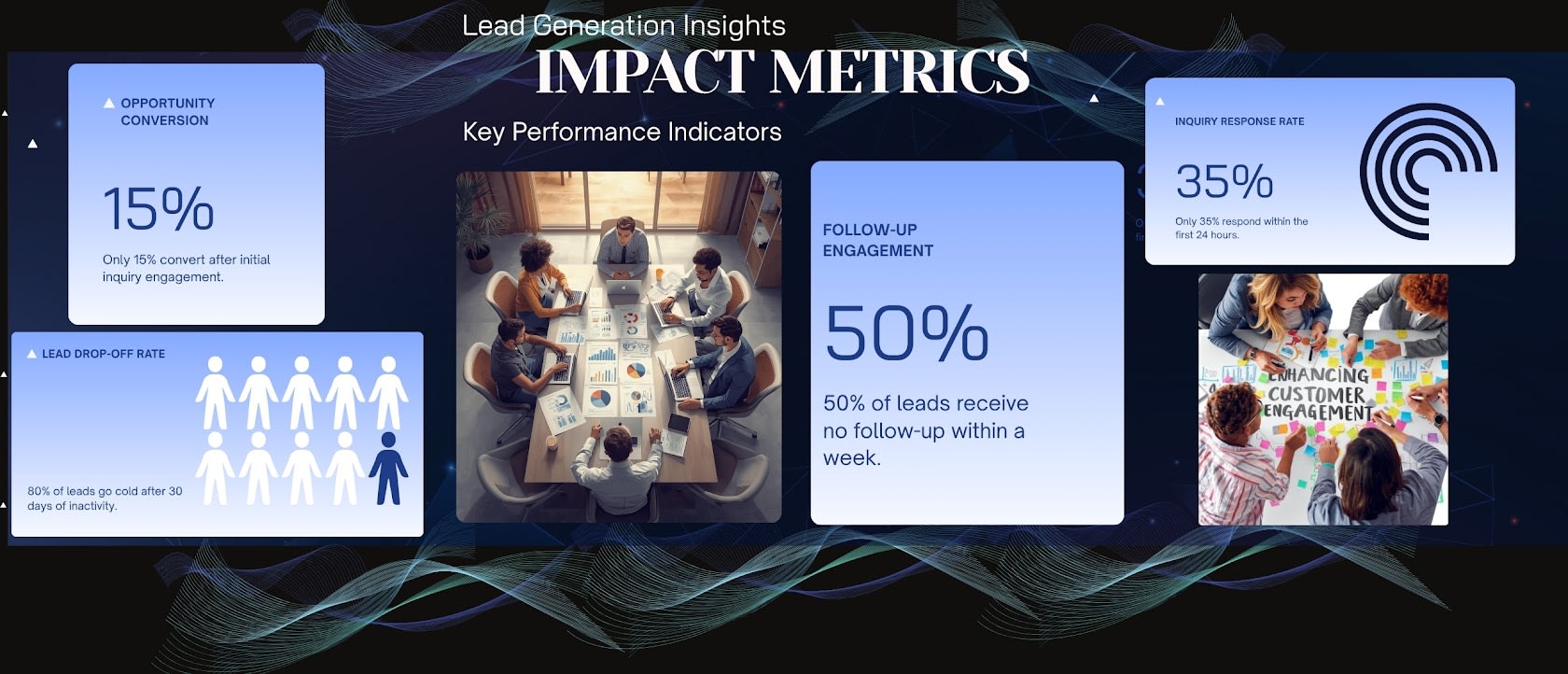
What “high-intent” actually means
A high-intent lead is not just someone who says hello.
It is someone showing signals such as:
-
asking for pricing
-
checking availability
-
wanting a callback
-
requesting a demo
-
asking for a site visit
-
seeking an appointment
-
comparing packages
-
asking whether you serve their city, use case, or problem
These are not awareness-stage signals.
These are movement signals.
If those leads still do not convert, your bottleneck is almost never just awareness.
It is the workflow after the first touch.
Why high-intent leads go cold
1. Response takes too long
The fastest leak is delay.
The buyer reaches out while interest is active. If the reply comes too late, two things happen:
-
the buyer contacts someone else
-
the emotional momentum disappears
In many categories, the business that responds first does not automatically win.
But the business that responds late often loses.
2. The first response is generic
A lot of businesses answer high-intent questions with low-value replies:
-
“Please share your number”
-
“Our team will connect”
-
“Visit our website”
-
“Thanks for contacting us”
These responses create friction instead of progress.
High-intent buyers want the next step to feel clear.
3. Qualification is too weak
If the business does not capture the right context early, sales enters the conversation blind.
That leads to:
-
repeated questions
-
longer cycles
-
weaker prioritization
-
avoidable back-and-forth
-
slower conversion
The issue is not that qualification exists.
The issue is whether it is useful.
4. The lead is routed badly
A good lead routed to the wrong person becomes a slow lead.
Common routing failures:
-
wrong team
-
wrong location
-
wrong language
-
wrong service category
-
no branch assignment
-
no ownership clarity
When nobody clearly owns the next step, leads quietly decay.
5. There is no booking layer
Many leads go cold not because the conversation failed, but because the business never made the next commitment easy.
The lead asks about:
-
demo
-
consultation
-
site visit
-
appointment
-
callback
-
quote discussion
The business replies:
“We will check and get back to you.”
That gap is where momentum dies.
6. Follow-up depends on memory
This is one of the biggest silent killers.
The lead sounded serious.
The sales rep was busy.
The day got crowded.
The follow-up never happened.
Businesses lose leads every week not because nobody cared, but because the system depended on humans remembering at the right time.
7. Channel continuity breaks
The lead starts on one channel and moves to another.
The business loses context.
That creates:
-
repeated questions
-
slower handling
-
lower trust
-
frustration at the exact moment the buyer expected progress
8. Off-hours demand gets ignored
Many high-intent leads appear:
-
in the evening
-
on weekends
-
during holidays
-
outside branch hours
-
while teams are busy with current customers
If the workflow is only human-driven, these leads sit unattended during the period when they were most ready to move.
9. Sales and operations are disconnected
Sometimes a lead goes cold because the front-end conversation promised something the operating system could not deliver fast enough.
Examples:
-
site visit coordination is delayed
-
appointment availability is unclear
-
branch handoff is slow
-
quote prep is manual
-
sales cannot see prior conversation context
The lead feels ignored, but the deeper problem is workflow fragmentation.
10. Nobody measures where the drop happens
Some businesses know they have poor conversion.
But they do not know whether the failure is:
-
response speed
-
qualification quality
-
routing
-
booking
-
follow-up
-
rep handling after handoff
Without that diagnosis, they keep fixing the wrong thing.
The biggest misconception
Many teams think:
“If the lead was serious, they would have followed up again.”
That is often false
High-intent buyers are usually not choosing whether to buy.
They are choosing whom to move forward with.
And they often compare multiple providers at once.
That means your workflow competes against:
-
faster businesses
-
clearer businesses
-
more organized businesses
-
businesses that make the next step easier
So when a lead goes cold, the question is not just:
“Was the lead serious?”
The better question is:
“Did our workflow make moving forward easy enough?”
What to fix first if high-intent leads are going cold
Fix 1: shorten time to first useful response
Not just first response. First useful response.
The lead should get one of these quickly:
-
a relevant answer
-
a qualification path
-
a booking option
-
a routed handoff
-
a clear next step
Fix 2: improve early qualification
Capture enough information to move intelligently:
-
service or product interest
-
urgency
-
location
-
use case
-
preferred next step
-
branch or category relevance
Fix 3: automate routing
Do not let good enquiries sit in a shared inbox or generic queue.
Fix 4: remove booking friction
If the lead is ready to talk, make scheduling simple.
Fix 5: build follow-up logic
Interested silence should trigger structured follow-up, not forgetfulness.
Fix 6: connect channels and teams
A lead should not need to restart the conversation every time they change channel.
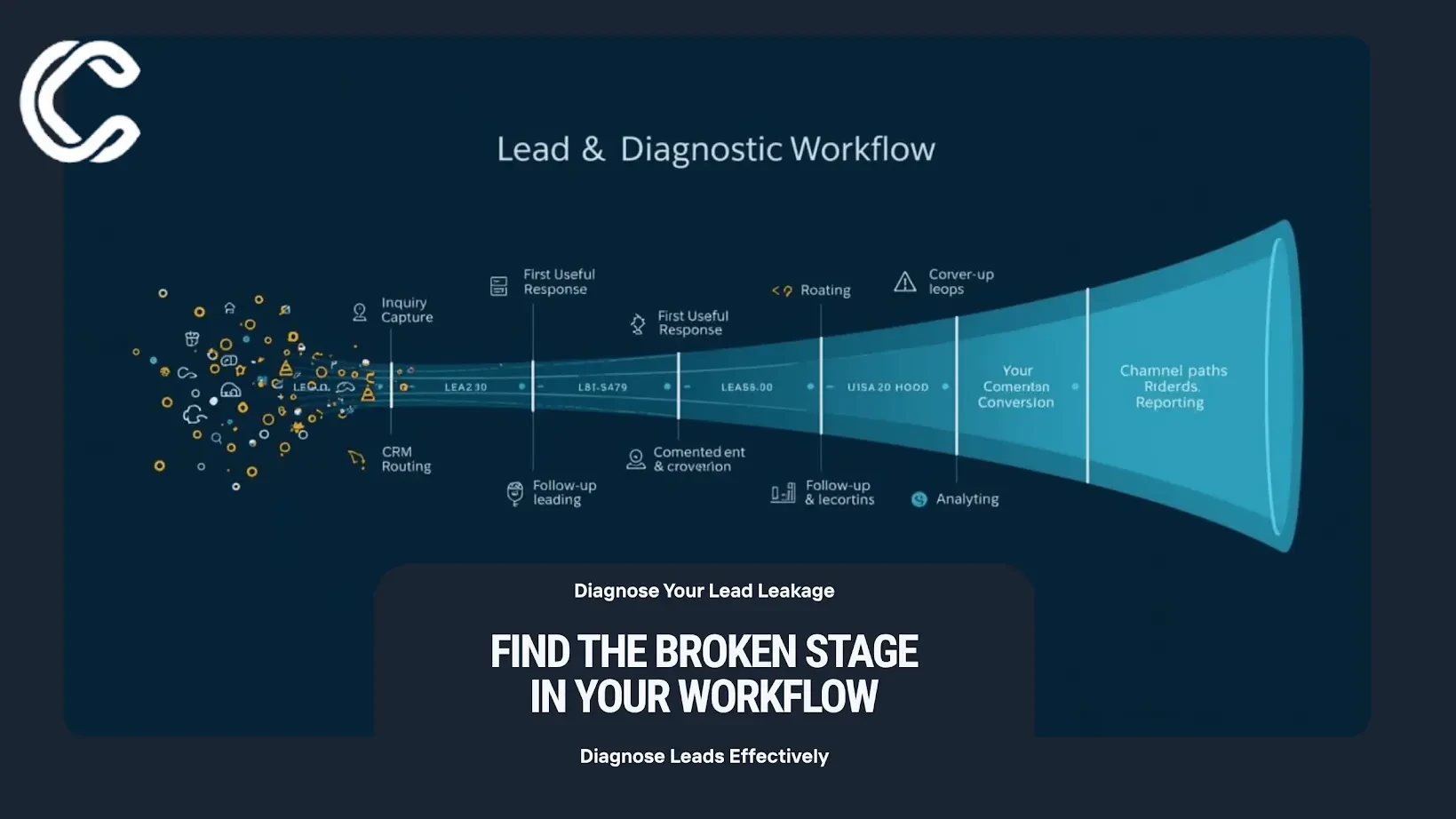
A simple lead leakage diagnosis framework
Use this in order:
Stage 1: Inquiry capture
Are leads entering a structured system, or scattered across channels?
Stage 2: First useful response
How fast does the lead receive a relevant next step?
Stage 3: Qualification
Do you capture enough context to prioritize and act?
Stage 4: Routing
Does the right person receive the lead fast enough?
Stage 5: Booking
Can the lead move to a real next commitment without manual delay?
Stage 6: Follow-up
What happens if the lead does not respond immediately?
Stage 7: Reporting
Do you know exactly where high-intent leads are dropping?
This is the point:
leads do not “mysteriously” go cold.
There is almost always a broken stage.
What strong businesses do differently
Businesses that convert more high-intent demand tend to do five things well:
-
they respond fast
-
they qualify early
-
they route correctly
-
they make booking easy
-
they follow up with discipline
They do not rely on random heroics from sales reps.
They design a repeatable workflow.
That is what creates consistency.
Conclusion
If high-intent leads are still going cold in your business, do not start by blaming traffic quality.
Start by examining the workflow after the first inquiry.
Most revenue leakage happens there.
The fix is usually not:
-
more ads
-
more content
-
more traffic
-
more raw leads
The fix is usually:
-
faster handling
-
better qualification
-
cleaner routing
-
easier booking
-
stronger follow-up logic
That is how demand becomes pipeline.
FAQ
Why do high-intent leads go cold even after contacting a business?
Usually because the workflow after inquiry is weak: response is slow, qualification is shallow, routing is poor, booking is manual, or follow-up is inconsistent.
Are slow responses the main reason leads go cold?
They are one of the biggest reasons, but not the only one. A fast but generic response can still underperform if it does not move the buyer forward.
Can automation reduce lead drop-off after inquiry?
Yes. Automation can improve response speed, qualification, routing, booking, reminders, and follow-up continuity.
What is the first metric to check?
Start with time to first useful response, then review booking rate and follow-up response rate.
Do high-intent leads need human sales immediately?
Not always. Many leads need fast qualification and booking first. Human time should be applied where it increases conversion, not wasted on repetitive early-stage questions.
About the Author
Akanksha
Ready to orchestrate your AI future?
Converiqo AI helps you design, deploy, and scale automation workflows that move your business faster, leveraging specialized solutions like our AI bot platform for lead generation, customer self-service AI bot platform, employee self-service AI bot platform, retail omnichannel automation, and our detailed guides on how agentic AI bot platforms work in enterprises and cost structure of enterprise AI bot platforms. Connect with our team to see the platform in action and co-create the next chapter of intelligent operations.
Read More Blogs
Discover more insights and product updates curated by the Converiqo AI team.

Real ROI of Field Force Automation - Beyond the Activity Dashboard
Four metrics that show real field force automation ROI in India - productivity, data reliability, throughput, and field attrition - not just the activity dashboard.

Beat Planning Is the Highest-Leverage Field Force Capability - Here Is Why
Beat planning decides coverage, call frequency, and whether field time is productive. Why it is the single highest-leverage field force automation capability.
Why an Indian Field Force App Has to Work Offline - and Be Built for Real Devices
Field work in India happens where connectivity is intermittent. A field force app that assumes constant connectivity fails exactly where field work is done.