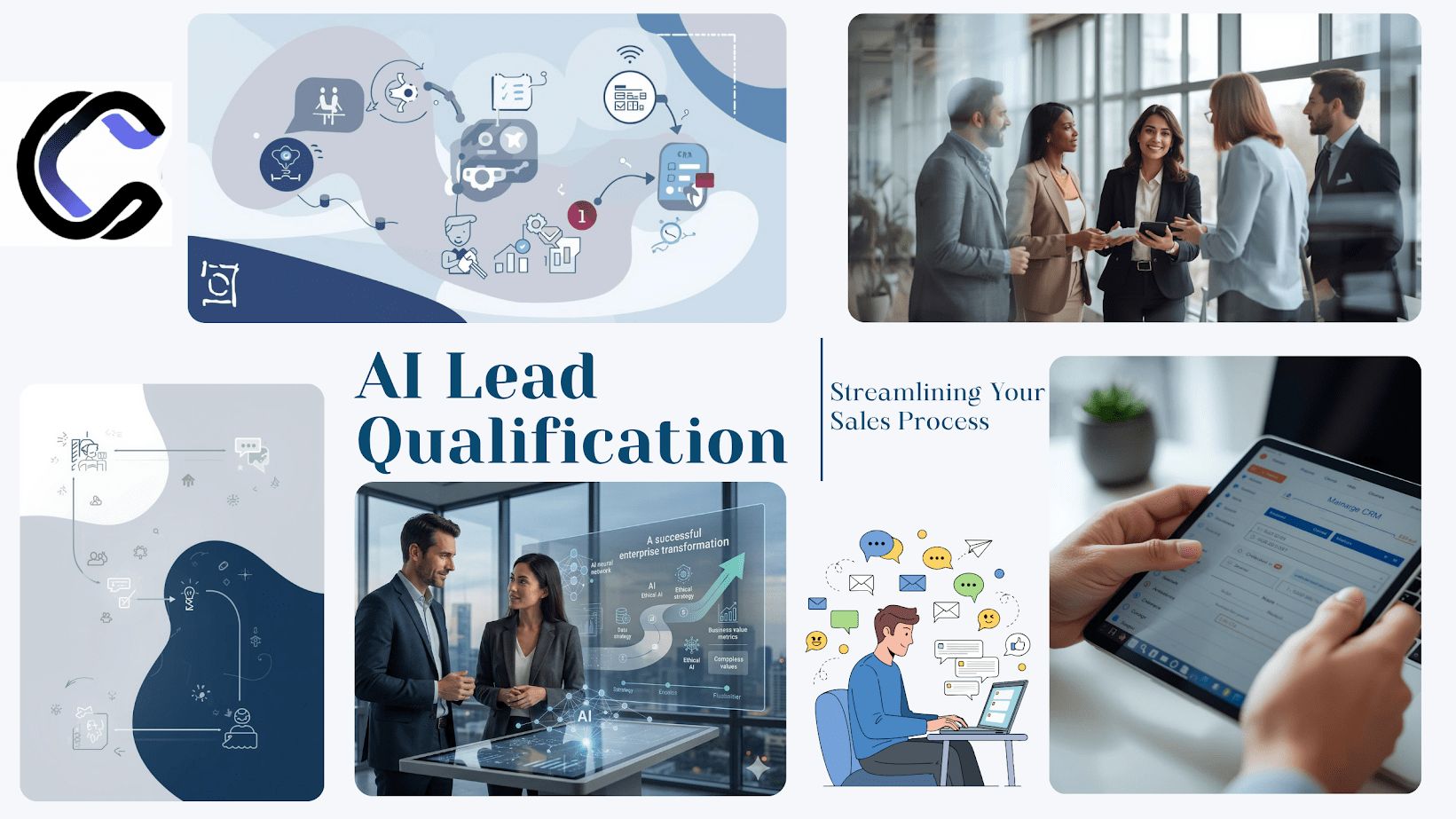
One of the fastest ways to waste valuable sales time is to send every inquiry directly to a human representative. At first, that may sound customer-friendly and responsive. But in reality, it often creates a poor workflow.
Because not every inquiry is equally ready to buy, relevant to your offering, urgent in timing, serviceable by your team, commercially viable, or worth the same level of human attention right now.
This is exactly where many businesses get stuck.
They know they need faster responses. They know they cannot afford to miss leads. But they also understand that sales teams should not spend their entire day repeating basic qualification questions that could have been handled earlier.
That is the real role of AI lead qualification.
Not to block potential buyers. Not to sound robotic. And definitely not to score leads just for the sake of scoring.
Its purpose is simple:
Identify fit, urgency, and the right next step before human sales time is used.
What AI Lead Qualification Actually Means
AI lead qualification uses conversational logic, intent detection, workflow rules, and scoring signals to determine what the lead is actually looking for, whether the lead fits your business, how urgent the request is, who should handle it internally, and what should happen next.
That next step could include instant booking, branch or team routing, callback scheduling, quote generation workflow, nurture sequence, human sales handoff, disqualification, or redirection to support.
Important clarification:
Qualification is not rejection.
Good qualification actually improves the buyer experience by reducing confusion and ensuring that the right leads move forward quickly and efficiently.
Why Businesses Need Qualification Before Sales Handoff
Without proper qualification, businesses typically create three costly problems.
1. Sales time gets wasted
Sales reps spend too much time asking basic questions that could have been captured earlier in the journey.
2. High-intent leads wait too long
This happens because teams are busy handling low-fit or incomplete enquiries.
3. Reporting becomes unclear
Leadership sees a high volume of leads but cannot identify which ones were actually meaningful or revenue-ready.
Qualification solves these problems by introducing structure before any human action takes place.
What a Good Qualification Workflow Should Uncover
A strong qualification flow should gather just enough information to move the lead forward intelligently.
This usually comes from six key categories:
1. Need or Use Case
A business first needs to understand what exactly the lead is looking for. This could be a specific product or service, a property type or category, a course or program, a department or support type, or a package or offering. Without this context, routing and follow-up become guesswork.
2. Intent Level
The next step is identifying how serious the lead is right now. Signals of stronger intent often include asking for pricing, checking availability, requesting a demo or appointment, booking a visit, comparing plans, or asking for immediate contact. These actions help separate curiosity from buying intent.
3. Urgency or Timeline
It is also important to know when the lead wants to take action. This helps distinguish between early research-stage leads, near-term buyers, urgent service requests, and same-day or same-week needs. Timing often determines whether a lead should be nurtured, routed quickly, or prioritized for human follow-up.
4. Fit
Qualification should also confirm whether the lead matches your business criteria. This may include geography or service area, company size, budget range, product eligibility, or use-case relevance. A lead may be interested, but still not be the right fit for your service model.
5. Decision Role
Another important factor is understanding who the person is in the decision process. This could be an owner or founder, a student or parent, a patient, someone from procurement, an end user, an admin or coordinator, or an influencer in the decision. Knowing this helps shape how the lead should be handled and what kind of response is appropriate.
6. Preferred Next Step
Finally, a good workflow should capture what the lead wants to do next. Some may want to request a call, book a demo, get pricing, schedule a visit, connect on WhatsApp, or speak to a specialist. This is often underrated but extremely powerful because it signals how close the lead is to conversion.
What to Ask Without Creating Friction
Many businesses make one of two mistakes: asking too little, which creates weak context for sales, or asking too much, which causes users to drop off.
The solution is progressive qualification.
Ask only what is necessary for the next step.
For Website Chatbots
For website chatbots, questions should stay simple and direct. You might ask what the visitor is looking for today, which city or location matters, whether they want pricing, booking, or a callback, and what the best number or WhatsApp contact is. The goal is to collect only the information needed to move the conversation forward smoothly.
For WhatsApp Conversations
For WhatsApp conversations, you can go slightly deeper. Since the format feels more conversational, it is easier to ask when they are planning to move forward, which option interests them most, and whether they would prefer a demo, visit, or call. This helps create stronger qualification without making the interaction feel heavy.
For Voice Interactions
For voice interactions, the language should feel natural and conversational. Questions like what service they need help with, whether it is for today or later this week, and whether they would like to book now or speak to someone work better than rigid scripted prompts.
Qualification should feel like progress, not interrogation.
What to Score
Lead scoring should always support action, not just exist for reporting.
Focus on signals that actually change what happens next. These usually include buying intent, urgency, product or service relevance, location fit, repeat engagement, booking behavior, account value such as enterprise versus SMB, budget alignment, and lead source quality.
For example, a same-week site visit request should score higher than a brochure download. A pricing inquiry should be prioritized differently than a general query. A returning high-value customer should skip generic queues.
The score is not the outcome.
It is the prioritization signal.
What to Automate Before Sales Steps In
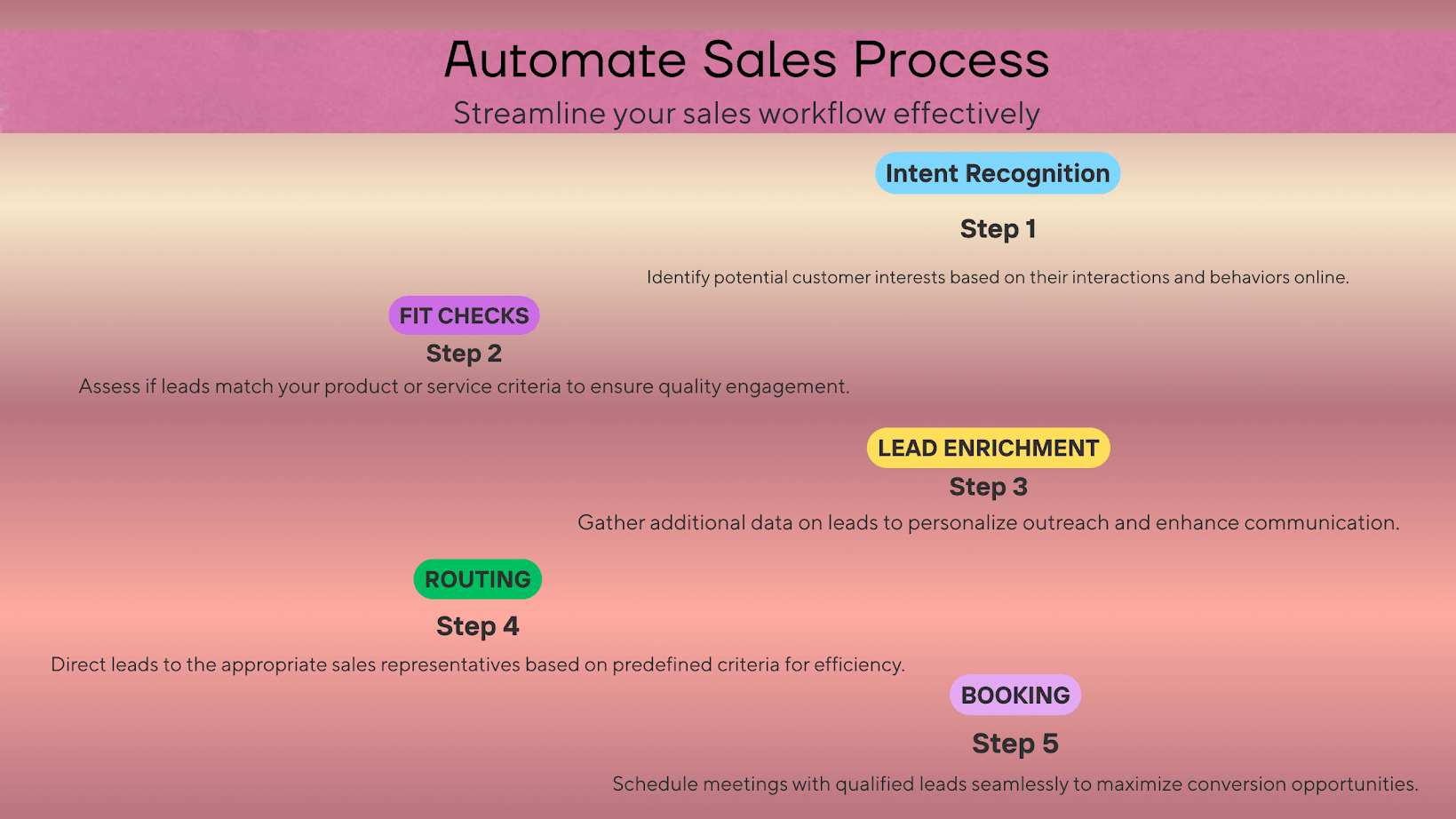
A strong AI qualification system can automate intent recognition, such as identifying whether the conversation is about sales, support, or booking. It can also handle dynamic question flow, fit validation, structured data capture, routing to the right team, booking workflows, follow-up triggers, and contextual handoff to sales.
When a human steps in, they should already know what the lead wants, what has been asked, what has been answered, and what action is expected.
That is where true productivity gains happen.
What Should Stay Human
Not everything should be automated.
Human involvement is essential when deals are high-value or complex, when negotiation begins, when exceptions arise, when empathy is critical, when enterprise-level decisions are needed, or when consultative selling is required.
Automation should support, not replace, human judgment.
Conclusion
AI lead qualification is not about making buyers jump through hoops.
It is about making the entire revenue journey cleaner and more efficient.
Sales teams perform better when low-quality noise is filtered, serious leads are prioritized, context is captured early, and next steps happen faster.
That is why effective qualification improves both efficiency and conversion.
It protects human time while helping serious buyers move forward faster.
Build My AI Qualification Flow
FAQ
What is AI lead qualification?
AI lead qualification is the use of conversational logic and workflow automation to identify lead intent, fit, urgency, and next step before human sales time is applied.
Does lead qualification reduce conversions by asking too many questions?
It can if designed badly. Good qualification asks only the questions needed for the next action and keeps the experience low-friction.
What should businesses score in a qualification workflow?
Businesses should score signals that affect priority or routing, such as intent, urgency, fit, geography, and preferred next step.
Should every lead go to sales after qualification?
No. Some leads should be booked directly, nurtured, routed elsewhere, or disqualified if they do not fit the workflow.
What is the biggest qualification mistake?
The biggest mistake is collecting information that does not change what happens next.
About the Author
Md Ashik Alam
Ready to orchestrate your AI future?
Converiqo AI helps you design, deploy, and scale automation workflows that move your business faster, leveraging specialized solutions like our AI bot platform for lead generation, customer self-service AI bot platform, employee self-service AI bot platform, retail omnichannel automation, and our detailed guides on how agentic AI bot platforms work in enterprises and cost structure of enterprise AI bot platforms. Connect with our team to see the platform in action and co-create the next chapter of intelligent operations.
Read More Blogs
Discover more insights and product updates curated by the Converiqo AI team.

Real ROI of Field Force Automation - Beyond the Activity Dashboard
Four metrics that show real field force automation ROI in India - productivity, data reliability, throughput, and field attrition - not just the activity dashboard.

Beat Planning Is the Highest-Leverage Field Force Capability - Here Is Why
Beat planning decides coverage, call frequency, and whether field time is productive. Why it is the single highest-leverage field force automation capability.
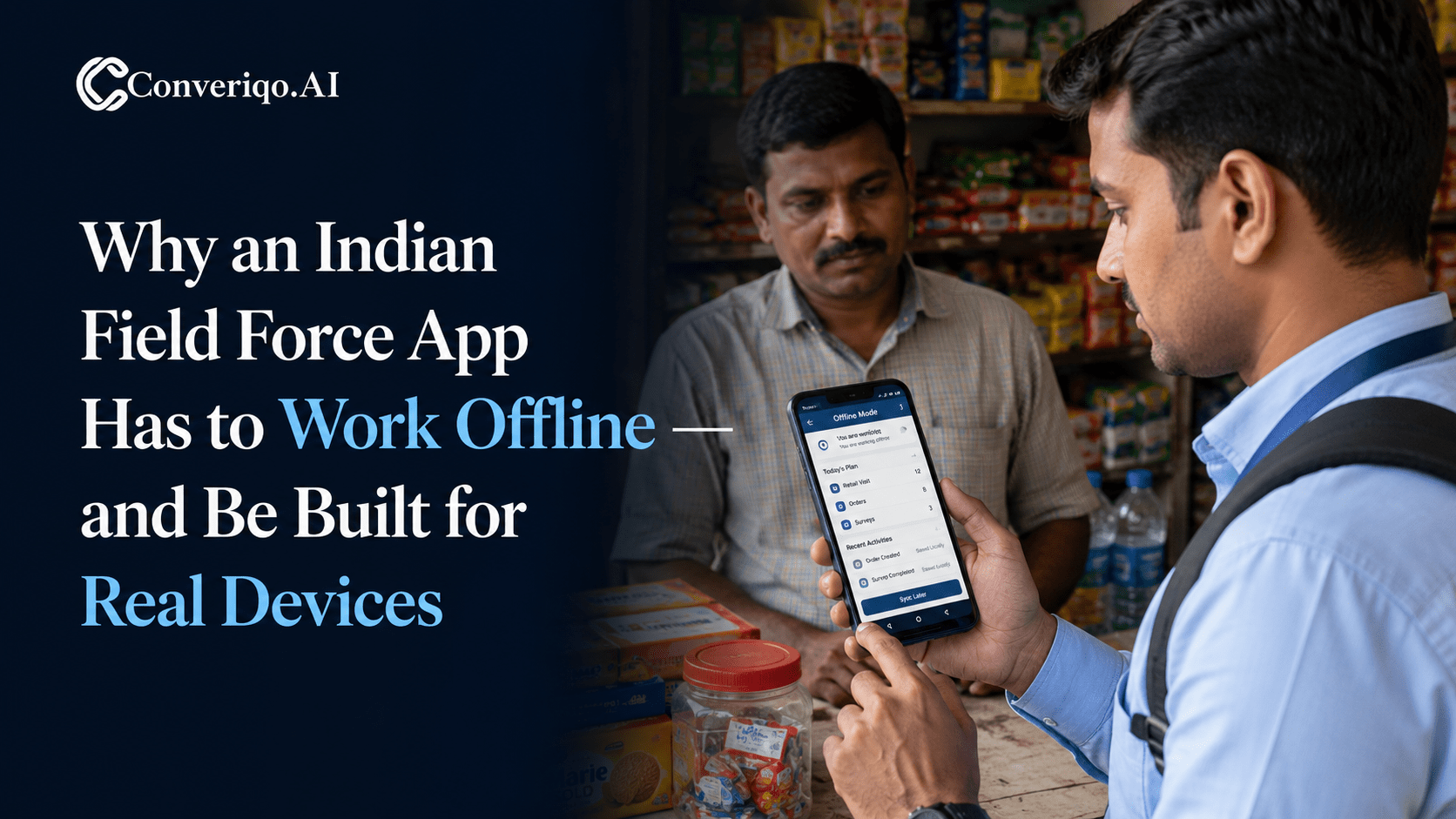
Why an Indian Field Force App Has to Work Offline - and Be Built for Real Devices
Field work in India happens where connectivity is intermittent. A field force app that assumes constant connectivity fails exactly where field work is done.