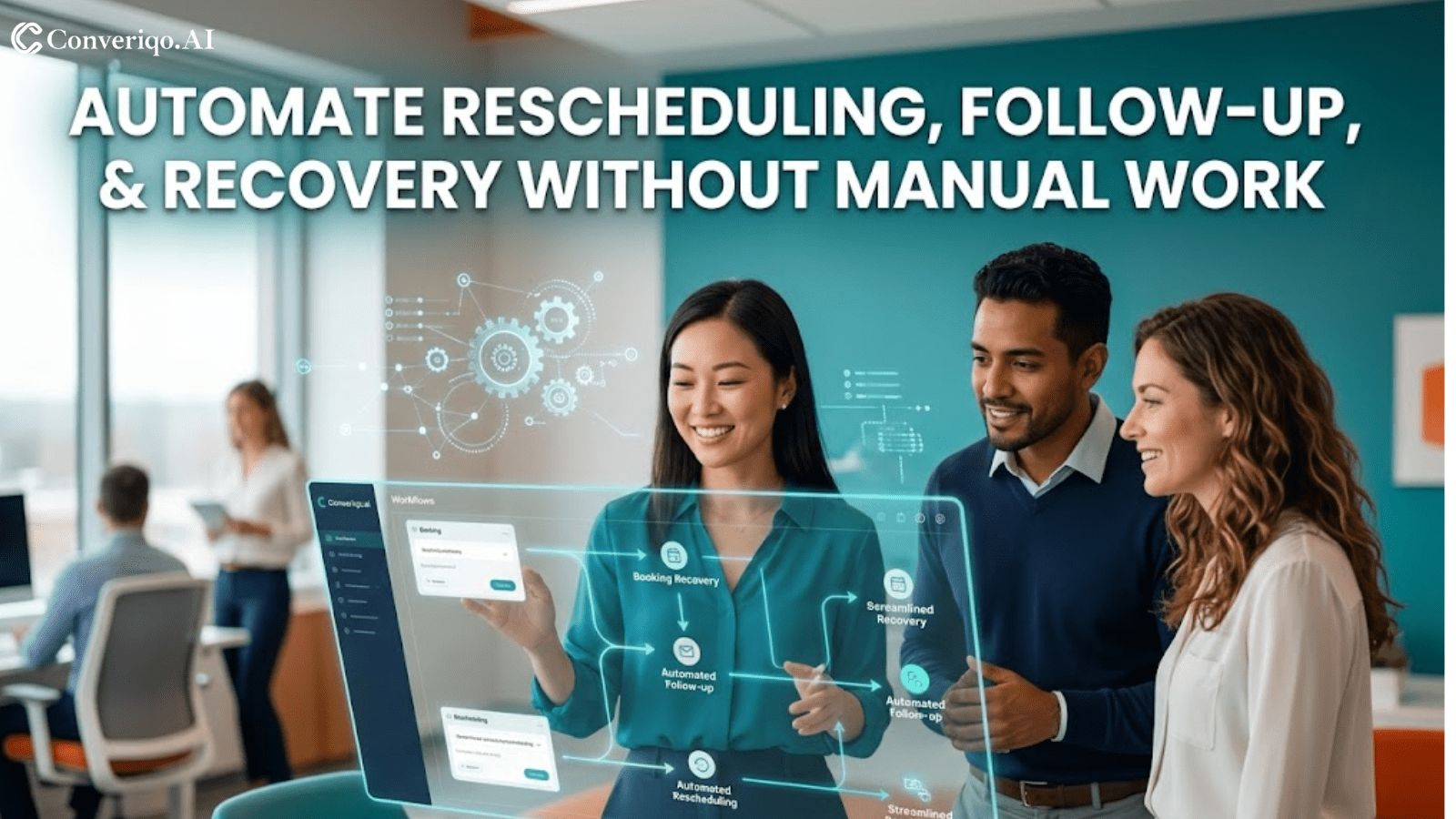
A lot of businesses treat missed or changed appointments like dead opportunities.
That is a mistake.
Not every missed booking is lost intent.
Sometimes the lead still wants the appointment.
The time just did not work.
The reminder was missed.
The customer forgot.
The schedule changed.
That is why recovery workflows matter.
Why recovery matters
Without a recovery workflow, businesses lose appointments that could have been saved.
That means:
-
lower appointment yield
-
more wasted acquisition effort
-
more manual chasing
-
weaker conversion efficiency
Recovery helps protect the work already done to get the lead this far.
What recovery workflows should include
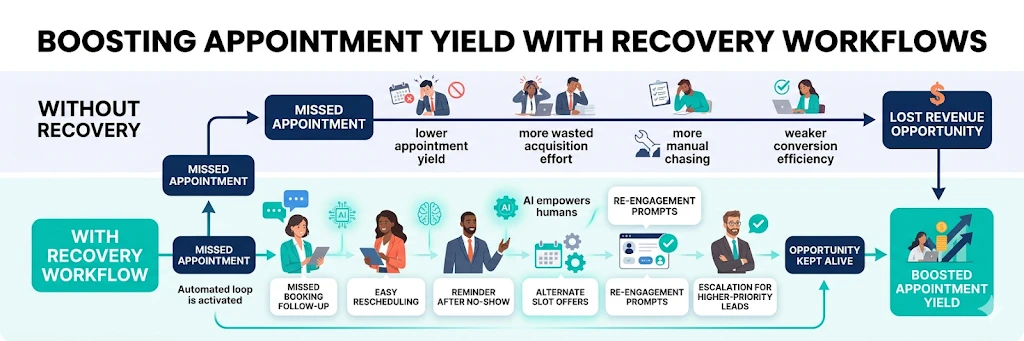
A good workflow may include:
-
missed booking follow-up
-
easy rescheduling
-
reminder after no-show
-
alternate slot offers
-
re-engagement prompts
-
escalation for higher-priority leads
This keeps the opportunity alive without requiring heavy manual intervention every time.
Conclusion
A good booking workflow does not end when a lead misses a slot.
It also knows how to recover momentum.
That is where rescheduling and booking recovery become commercially valuable.
FAQ
Why do booking recovery workflows matter?
Because many missed appointments are recoverable if the business makes it easy to reschedule or re-engage.
Is rescheduling really part of conversion?
Yes. It helps preserve intent that would otherwise be lost.
What should businesses automate here first?
Usually no-show follow-up, rescheduling, and incomplete booking recovery.
Can this reduce manual workload?
Yes. Recovery workflows reduce the need for teams to chase every missed appointment manually.
About the Author
Himani chaudhary
Ready to orchestrate your AI future?
Converiqo AI helps you design, deploy, and scale automation workflows that move your business faster, leveraging specialized solutions like our AI bot platform for lead generation, customer self-service AI bot platform, employee self-service AI bot platform, retail omnichannel automation, and our detailed guides on how agentic AI bot platforms work in enterprises and cost structure of enterprise AI bot platforms. Connect with our team to see the platform in action and co-create the next chapter of intelligent operations.
Read More Blogs
Discover more insights and product updates curated by the Converiqo AI team.

Real ROI of Field Force Automation - Beyond the Activity Dashboard
Four metrics that show real field force automation ROI in India - productivity, data reliability, throughput, and field attrition - not just the activity dashboard.

Beat Planning Is the Highest-Leverage Field Force Capability - Here Is Why
Beat planning decides coverage, call frequency, and whether field time is productive. Why it is the single highest-leverage field force automation capability.
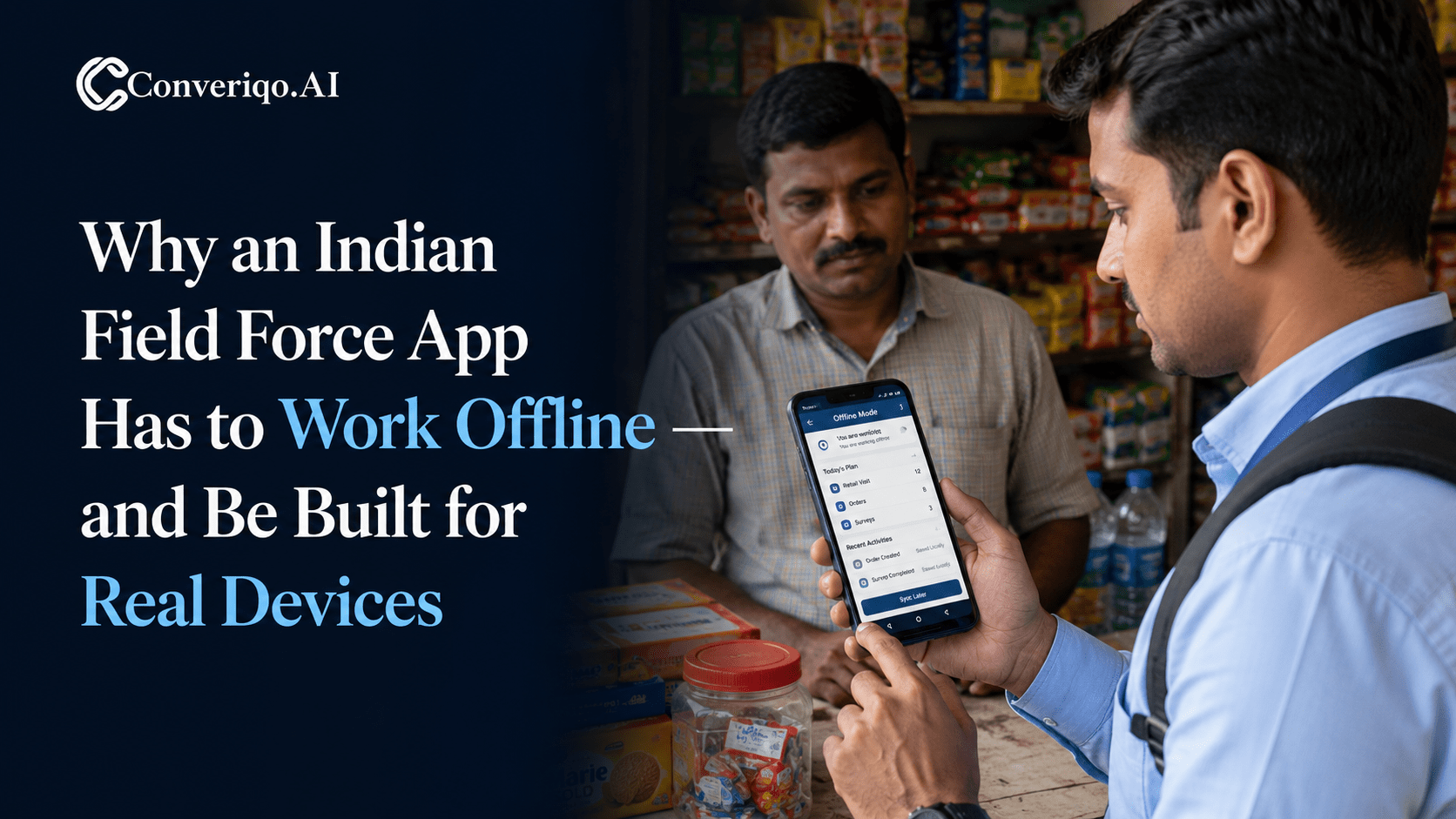
Why an Indian Field Force App Has to Work Offline - and Be Built for Real Devices
Field work in India happens where connectivity is intermittent. A field force app that assumes constant connectivity fails exactly where field work is done.