Self-Service vs Human Support in IT and Service Desk Workflows: What Should Be Automated and What Should Not?

A common mistake businesses make with service desk automation is thinking that it’s a choice between self-service or human support....

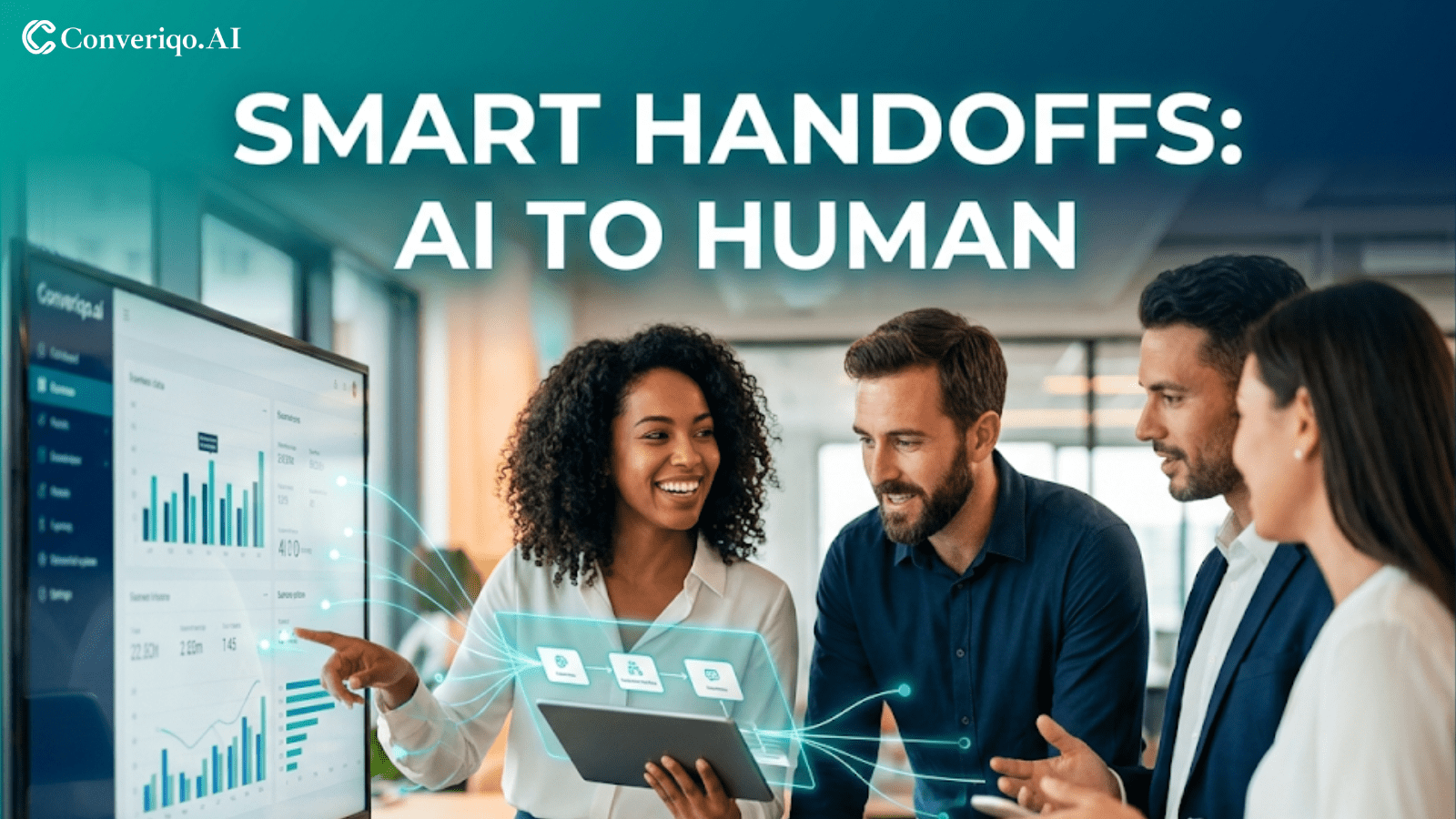
Smart Handoffs AI to Human: A team collaborating on AI data and dashboards, focusing on smooth transitions between AI and human assistance.

A common mistake businesses make with service desk automation is thinking that it’s a choice between self-service or human support.

This framing leads to poor decisions. Instead, the better question is:

Which issues are repetitive enough for structured self-service, and where does human expertise add more value?

Self-Service is Strong for:

  • Repetitive requests
  • Common guidance
  • Standard process help
  • Request-intake support
  • Basic status queries
  • Predictable access or setup workflows

Humans are Strong for:

  • Complex troubleshooting
  • Security-sensitive cases
  • Exceptions and special handling
  • Ambiguous technical issues
  • Urgent escalations
  • High-risk service problems

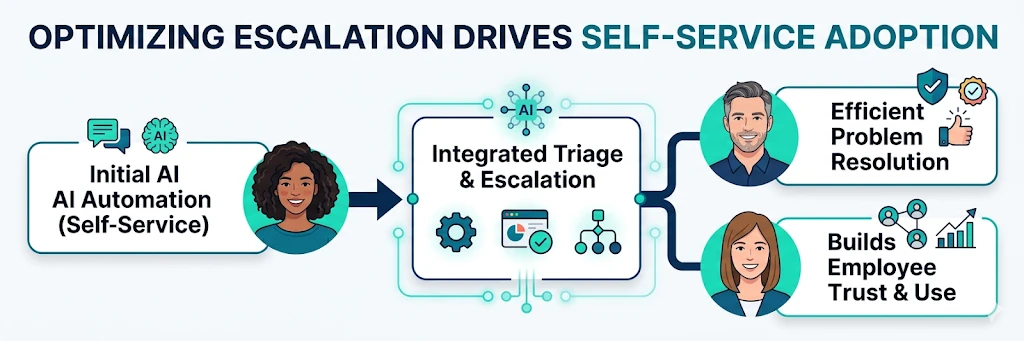
The strongest internal support model does not rely on replacing human support with automation. It involves a smart division of labor, where automation handles repetitive, low-complexity tasks, and humans step in where expertise is needed.

Why Bad Escalation Ruins Self-Service Adoption

Even the most useful automation fails when escalation is not designed properly.

Common escalation problems include:

  • No clear fallback to human support when needed
  • Employees having to repeat information due to poor context transfer
  • A loss of trust in the system as it becomes a barrier, not a help
  • Automation becoming a roadblock rather than an enabler of support

This is why self-service and human support should be designed together, ensuring smooth transitions and efficient handling of complex cases.

Conclusion

The strongest service desk automation model does not attempt to automate everything.

Instead, it improves how repetitive support is handled and preserves human attention for cases where expertise truly matters. This hybrid approach creates a more efficient, effective support system that benefits both the team and the employees they support.

Want to define what should stay human-led and what should be automated in your internal support workflow?

Streamline your internal support system by optimizing self-service and human involvement for maximum efficiency.
Edit CTA Above


FAQs

Should self-service replace service desk teams?

Not entirely. The best model uses self-service for repetitive issues and humans for complex, sensitive, or high-risk cases.

What is the biggest mistake in service desk automation?

Trying to automate too many issues without ensuring a robust escalation process is in place.

When should internal issues escalate to a human?

When the issue is unresolved, complex, urgent, exception-heavy, or security-sensitive.

Can automation still improve internal support with a small team?

Yes. Automation helps small teams reduce repetitive ticket volume and improve overall efficiency, making the team more scalable.

About the Author

AS

Ankur Singh

Software Engineer
Ankur Singh is a Full Stack Software Engineer at Mobiloitte Technologies with hands-on experience in building modern web applications using React.js, Next.js, Node.js, Express.js, and MongoDB. He writes about AI-driven systems, backend architecture, and emerging application workflows, focusing on how modern software moves from automation to execution at scale.

Ready to orchestrate your AI future?

Converiqo.AI helps you design, deploy, and scale automation workflows that move your business faster. Connect with our team to see the platform in action and co-create the next chapter of intelligent operations.

Read More Blogs

Discover more insights and product updates curated by the Converiqo.AI team.