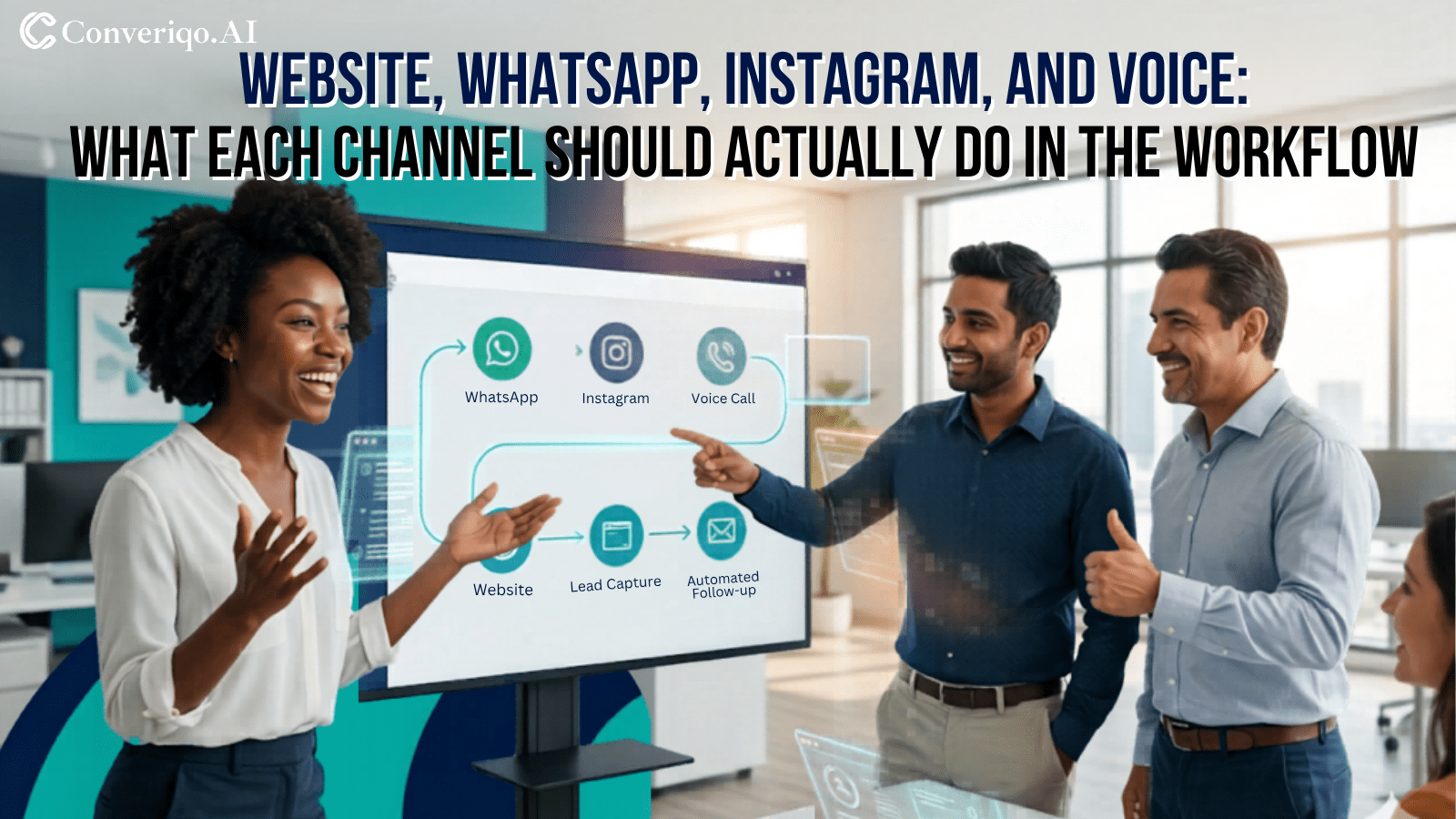
One of the most common reasons omnichannel setups fail is simple. Businesses expect every channel to handle every task.
While this may sound flexible, it usually creates confusion in execution. When all channels are treated the same, teams struggle to decide where to respond, how to follow up, and what the next step should be.
Different channels are naturally better suited for different parts of the customer journey. When businesses define these roles clearly, both customer experience and internal operations become more structured and efficient.
Common Channel Strengths
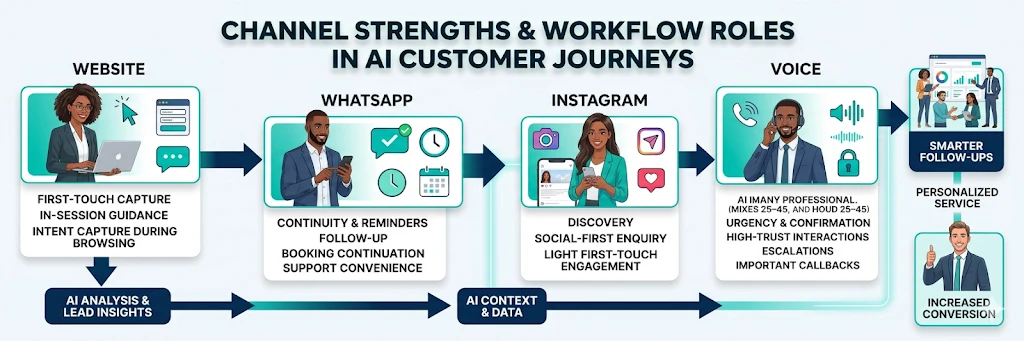
Website
The website is often the first point of interaction. It works best for capturing intent while the user is actively exploring.
- First-touch lead capture
- In-session guidance
- Understanding user intent during browsing
WhatsApp is strong for maintaining continuity after the first interaction. It supports quick, convenient communication and works well for ongoing engagement.
- Continuity across the journey
- Reminders and nudges
- Follow-up conversations
- Booking continuation
- Easy support interactions
Instagram is typically a discovery-driven channel. It is effective for early-stage engagement and initiating conversations in a social context.
- Discovery and awareness
- Social-first enquiries
- Light initial interactions
Voice
Voice communication is valuable when urgency or trust is required. It allows direct interaction and helps resolve situations quickly.
- Urgent conversations
- Confirmations
- High-trust interactions
- Escalations
- Important callbacks
These are not strict rules, but they reflect how channels generally perform within a workflow.
Why Channel Role Clarity Matters
When businesses do not define clear roles for each channel, several issues begin to appear. Teams may duplicate efforts, choose the wrong channel for follow-up, and struggle with inconsistent workflows.
This lack of clarity often leads to slower conversions, disorganized operations, and a fragmented customer experience. Without defined roles, even a well-intentioned omnichannel strategy can become chaotic.
When role logic is established early, channels begin to complement each other instead of competing. This creates a smoother journey for customers and a more manageable system for teams.
Conclusion
The goal of omnichannel is not to make every platform perform the same function. It is to ensure that each channel contributes effectively to a unified outcome.
By assigning clear roles and aligning them with the customer journey, businesses can reduce confusion, improve continuity, and create a more efficient path to conversion and resolution.
FAQs
Should every channel do the same thing?
No. Different channels are better suited for different stages and types of interaction within the customer journey.
Is WhatsApp always the continuity channel?
It is often strong for continuity, but the ideal role depends on the audience, market, and specific use case.
When is voice most useful?
Voice is most effective for urgent, sensitive, or high-value interactions that require direct communication.
Why does channel-role clarity matter?
It reduces confusion, improves workflow efficiency, and ensures a smoother experience for both customers and teams.
Can businesses change channel roles over time?
Yes. Channel roles should evolve based on performance, customer behavior, and business needs.
About the Author
Tanishka Raina
Ready to orchestrate your AI future?
Converiqo AI helps you design, deploy, and scale automation workflows that move your business faster, leveraging specialized solutions like our AI bot platform for lead generation, customer self-service AI bot platform, employee self-service AI bot platform, retail omnichannel automation, and our detailed guides on how agentic AI bot platforms work in enterprises and cost structure of enterprise AI bot platforms. Connect with our team to see the platform in action and co-create the next chapter of intelligent operations.
Read More Blogs
Discover more insights and product updates curated by the Converiqo AI team.
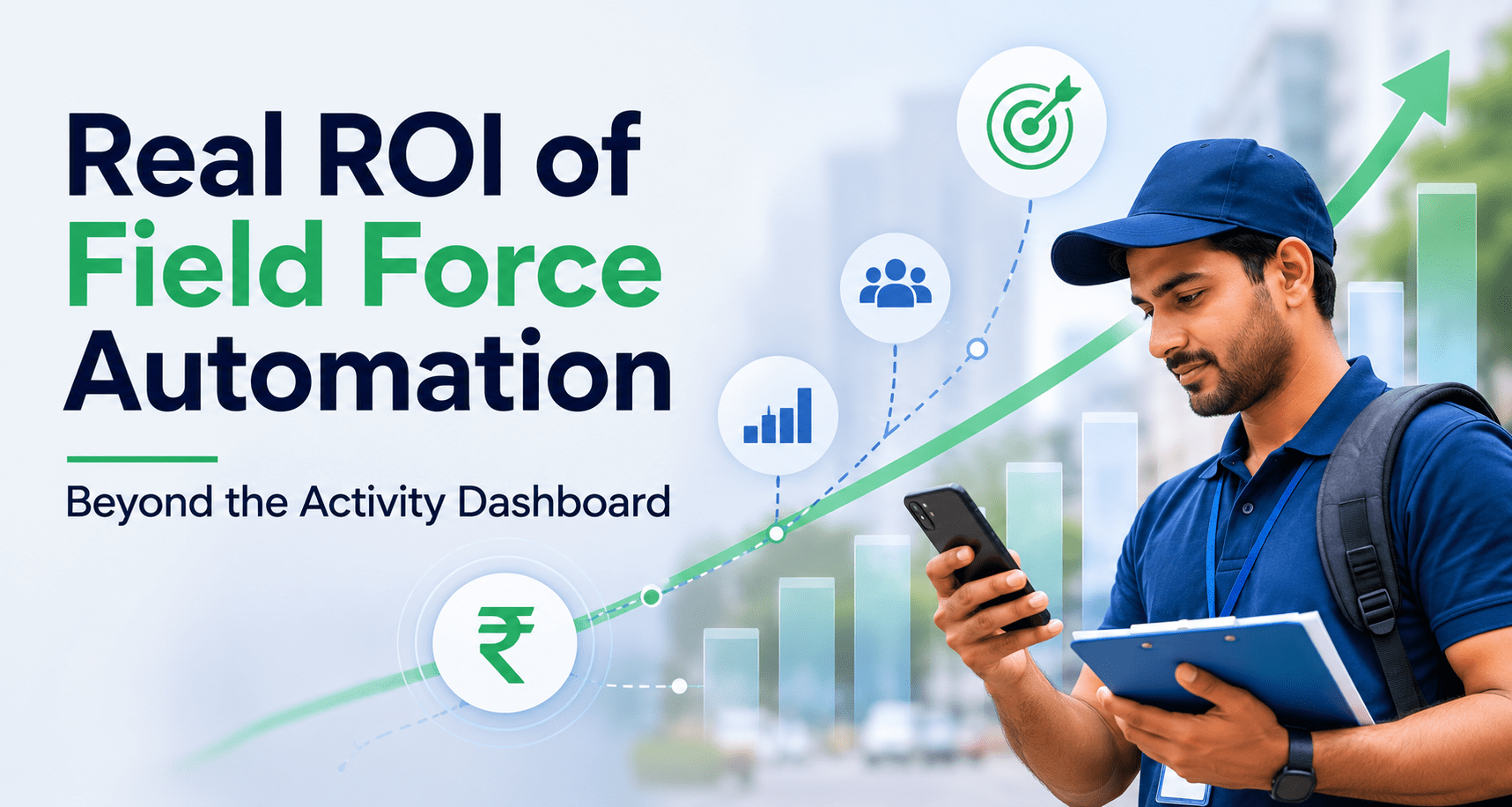
Real ROI of Field Force Automation - Beyond the Activity Dashboard
Four metrics that show real field force automation ROI in India - productivity, data reliability, throughput, and field attrition - not just the activity dashboard.

Beat Planning Is the Highest-Leverage Field Force Capability - Here Is Why
Beat planning decides coverage, call frequency, and whether field time is productive. Why it is the single highest-leverage field force automation capability.
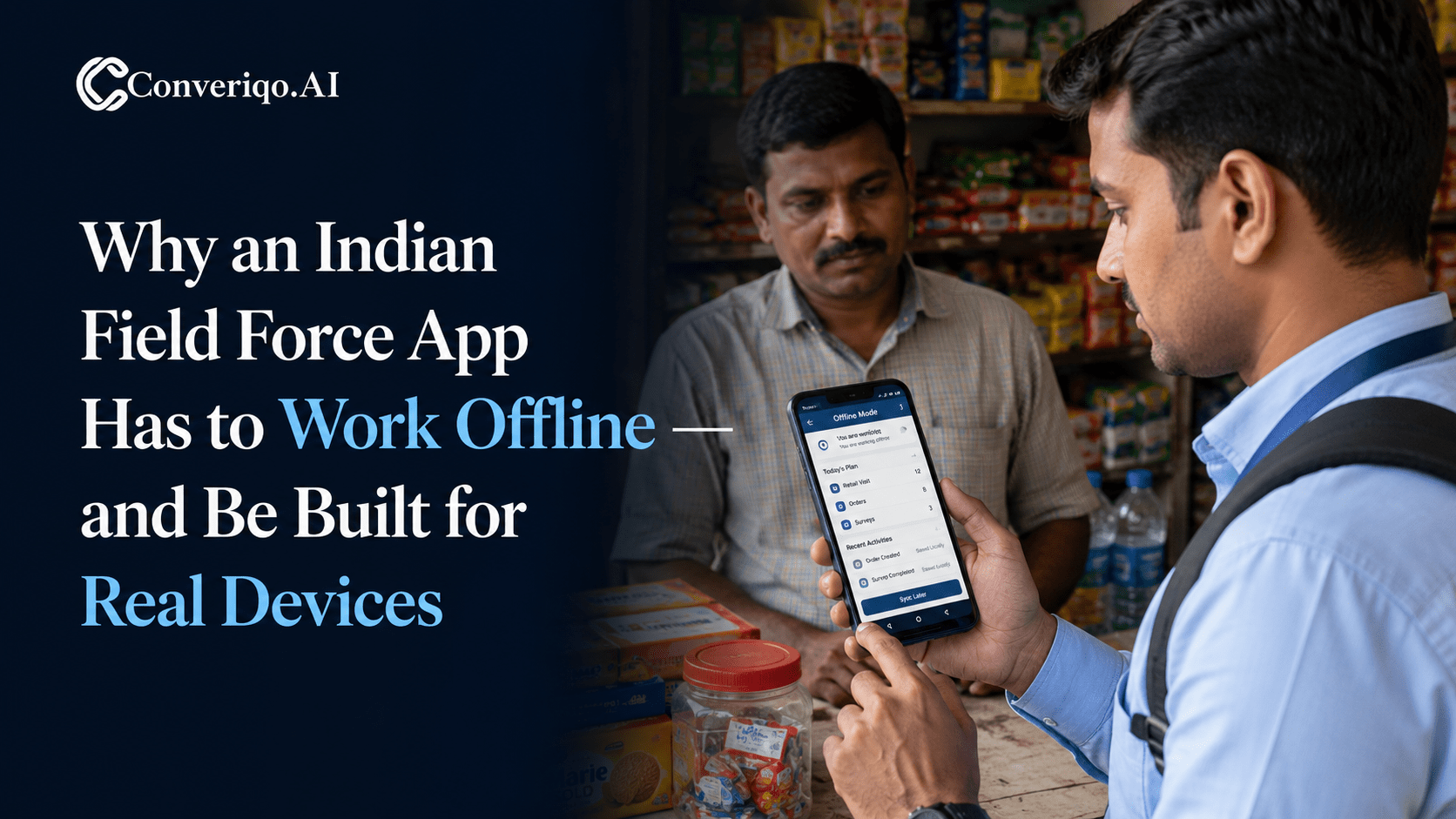
Why an Indian Field Force App Has to Work Offline - and Be Built for Real Devices
Field work in India happens where connectivity is intermittent. A field force app that assumes constant connectivity fails exactly where field work is done.