
Many businesses invest heavily in acquiring customers.
That focus makes sense, but a large amount of value is often lost after conversion because onboarding is too manual, slow, or fragmented. Customers sign up but fail to complete onboarding, required details are delayed, and teams spend excessive time chasing next steps.
As a result, activation slows down, customers feel uncertain, and momentum drops before they experience real value. This is why onboarding is not just an operational step. It is directly tied to growth and retention.
Why Onboarding Matters More Than Many Teams Admit
Onboarding is often treated as a post-sale administrative process. This is a critical mistake.
The onboarding phase directly influences activation, time-to-value, customer confidence, satisfaction, and long-term retention.
When onboarding is unclear or slow, customers experience friction early in the relationship. This leads to lower completion rates, slower adoption, higher support burden, and increased drop-off.
Onboarding is not a background task. It is a key stage in the customer journey that shapes long-term outcomes.
What Customer Onboarding and Client Success Automation Actually Means
Onboarding automation is often misunderstood as sending a few welcome emails. In reality, it is a structured workflow that guides customers through post-conversion steps.
A well-designed system helps businesses guide next steps, collect documents, trigger reminders, clarify progress, reduce manual follow-up, and escalate blockers when needed. It also extends into early client success by supporting initial usage and milestone completion.
This makes onboarding automation a continuity system rather than just communication.
The Biggest Mistake Businesses Make with Onboarding
A common assumption is that customers will naturally complete onboarding after signing up. In practice, this rarely happens without structured guidance.
Onboarding loses momentum when next steps are unclear, reminders are inconsistent, document collection is messy, and ownership is not defined.
Another mistake is over-automation without clarity, which makes the process feel rigid and confusing.
The better approach is to automate repetitive steps, guide customers clearly, and escalate issues quickly when needed.
The 5 Stages of a Strong Onboarding Workflow
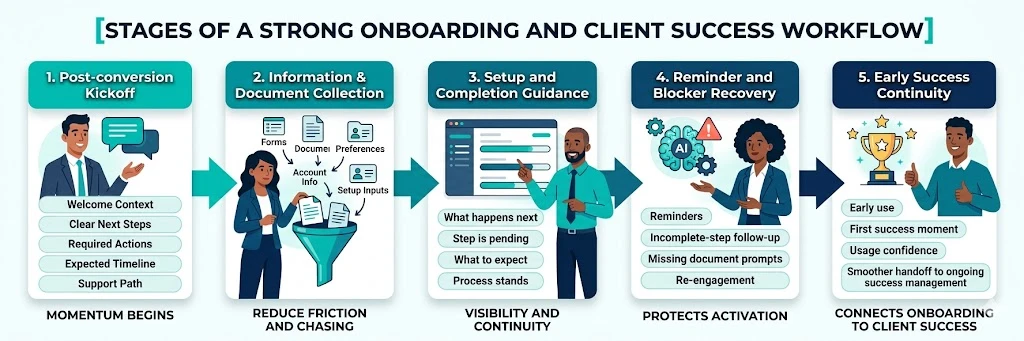
Post-Conversion Kickoff
Once a customer signs up, the system should respond immediately with clear next steps, expectations, and support options.
Information and Document Collection
Many onboarding journeys depend on collecting forms, documents, and setup inputs. This is often where delays occur, and structured workflows help reduce friction.
Setup and Completion Guidance
Customers need visibility into what is happening next and where they stand in the process. Clear guidance helps maintain momentum.
Reminder and Blocker Recovery
If progress stalls, the system should trigger reminders, follow-ups, and escalation to recover momentum.
Early Success Continuity
Onboarding should extend into early usage and success milestones, ensuring that customers experience value quickly.
Why Onboarding Drop-Off Happens
Customers do not always disengage because of lack of interest. More often, they drop off because the process becomes difficult to continue.
Common reasons include unclear steps, missing reminders, document friction, slow coordination, and lack of progress visibility.
This means onboarding drop-off is often a workflow problem rather than a customer problem.
Why Manual Onboarding Breaks Down
Manual onboarding may work at a small scale, but it becomes inefficient as volume grows. Teams repeat instructions, miss reminders, and handle customers inconsistently.
This leads to poor tracking, inconsistent communication, and longer time-to-value. Over time, customers get stuck between teams and lose momentum.
Structured workflows solve this by standardizing processes and reducing dependency on manual coordination.
Best Businesses for Onboarding Automation
Onboarding automation is especially valuable in businesses where post-sale progress depends on multiple steps or customer input.
Common use cases include:
- SaaS and software products
- Service businesses and agencies
- Consultants
- Education enrollments
- Healthcare onboarding flows
- Fintech account setup journeys
- Recruitment and staffing workflows
- B2B implementation-led businesses
In these industries, onboarding quality directly impacts retention and expansion potential.
What Businesses Should Automate First
Instead of automating everything, businesses should focus on high-impact onboarding workflows.
Strong starting points include:
- Welcome and next-step workflows
- Incomplete onboarding reminders
- Document collection prompts
- Setup progress updates
- Blocker escalation triggers
- Kickoff scheduling
- First-use or early success follow-up
These workflows are measurable and closely tied to activation outcomes.
The Difference Between Onboarding Communication and Workflow
Sending onboarding messages is not the same as managing onboarding workflows.
A workflow ensures that customers move forward through clear steps, reminders, progress tracking, and escalation when needed. It creates structure and continuity rather than just communication.
Businesses should focus on where onboarding stalls, what delays occur, and how to reduce friction without losing clarity or support.
A Practical Onboarding Automation Framework
Map the Journey
Identify all steps that occur after signup or agreement.
Identify Drop-Off Points
Find where customers commonly slow down or stop progressing.
Group Tasks by Complexity
Separate repetitive, partially structured, and high-touch tasks.
Define Reminder Logic
Set up triggers for incomplete steps and delays.
Define Escalation Paths
Ensure humans step in when needed to resolve blockers.
Track Outcomes
Measure completion rates, activation speed, blocker recovery, and manual effort reduction.
This transforms onboarding into a measurable and scalable system.
Conclusion
Customer onboarding is not just a setup phase. It is a critical moment that determines whether customers activate, succeed, and stay engaged.
By automating structured workflows, businesses can reduce friction, improve activation, speed up time-to-value, and recover stalled onboarding journeys.
Before focusing only on retention strategies, businesses should evaluate how much value is being lost due to inefficient onboarding. That is often where the real opportunity lies.
Want to see where your onboarding process is losing momentum?
FAQs
What is customer onboarding and client success automation?
It is the use of structured workflows to guide customers through onboarding, document collection, reminders, and early success milestones.
Why does onboarding automation matter?
It improves activation, reduces delays, and helps businesses retain customers by ensuring a smooth onboarding experience.
What should businesses automate first in onboarding?
They should start with welcome flows, reminders for incomplete steps, document collection, and progress updates.
Is onboarding automation only for SaaS businesses?
No. It is useful for any business where customers must complete steps or provide inputs after conversion.
How can businesses avoid poor onboarding automation?
By focusing on clarity, automating repetitive steps, and maintaining strong human support for complex or high-touch situations.
About the Author
Tanya Singhal
Ready to orchestrate your AI future?
Converiqo AI helps you design, deploy, and scale automation workflows that move your business faster, leveraging specialized solutions like our AI bot platform for lead generation, customer self-service AI bot platform, employee self-service AI bot platform, retail omnichannel automation, and our detailed guides on how agentic AI bot platforms work in enterprises and cost structure of enterprise AI bot platforms. Connect with our team to see the platform in action and co-create the next chapter of intelligent operations.
Read More Blogs
Discover more insights and product updates curated by the Converiqo AI team.
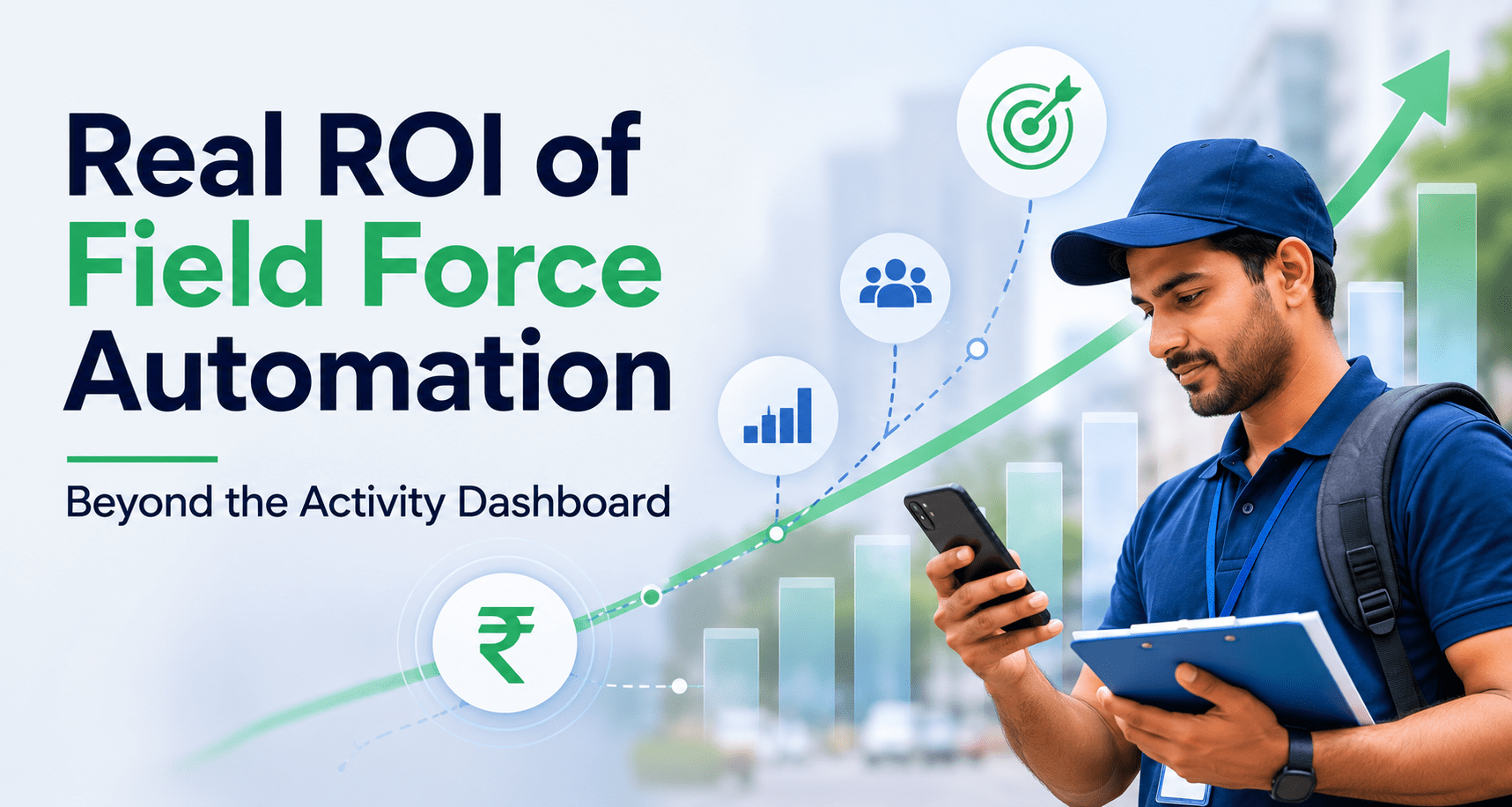
Real ROI of Field Force Automation - Beyond the Activity Dashboard
Four metrics that show real field force automation ROI in India - productivity, data reliability, throughput, and field attrition - not just the activity dashboard.

Beat Planning Is the Highest-Leverage Field Force Capability - Here Is Why
Beat planning decides coverage, call frequency, and whether field time is productive. Why it is the single highest-leverage field force automation capability.
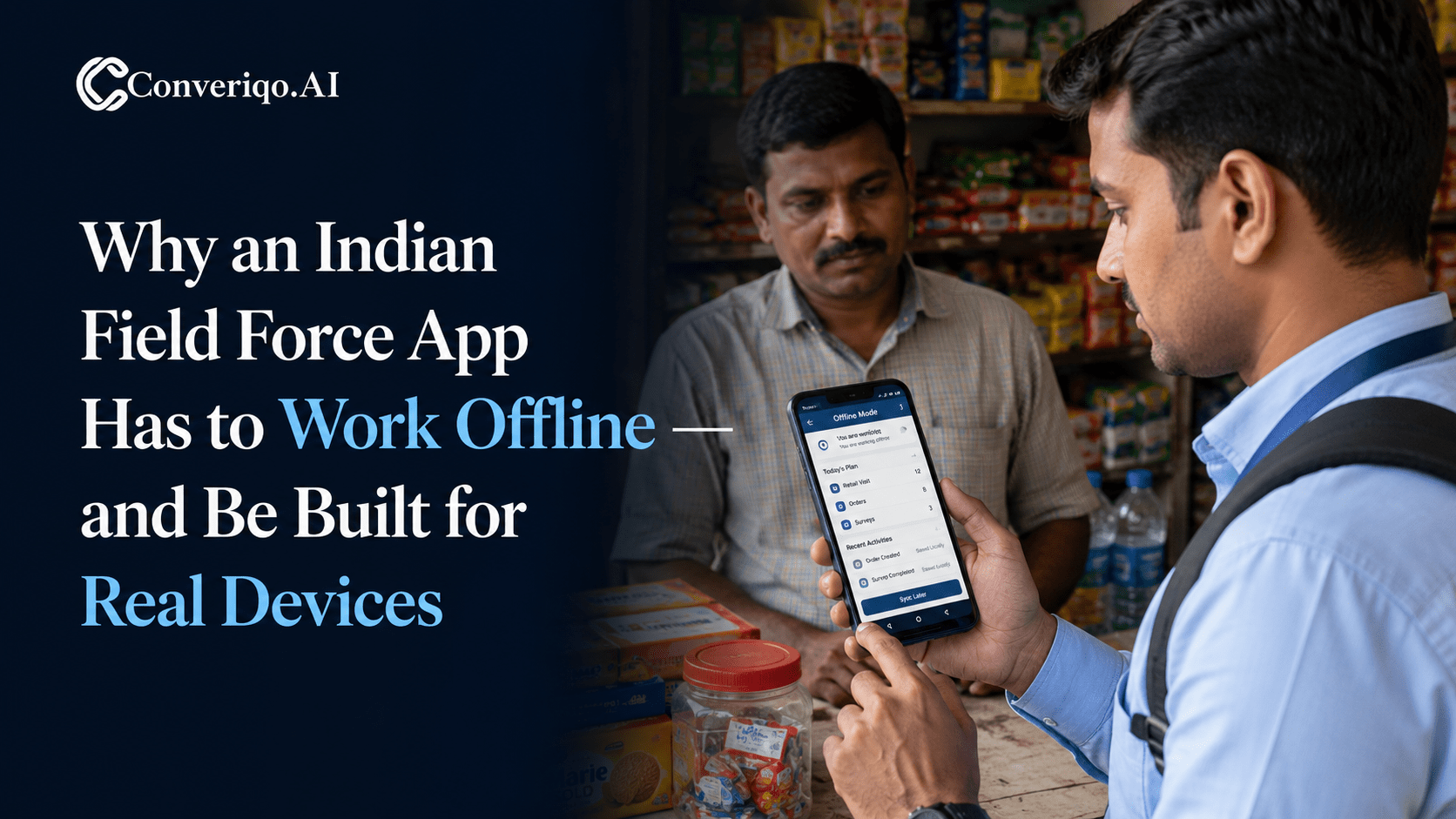
Why an Indian Field Force App Has to Work Offline - and Be Built for Real Devices
Field work in India happens where connectivity is intermittent. A field force app that assumes constant connectivity fails exactly where field work is done.