How to Automate Lead Capture, Qualification, Follow-Up, and Booking Without Losing High-Intent Leads
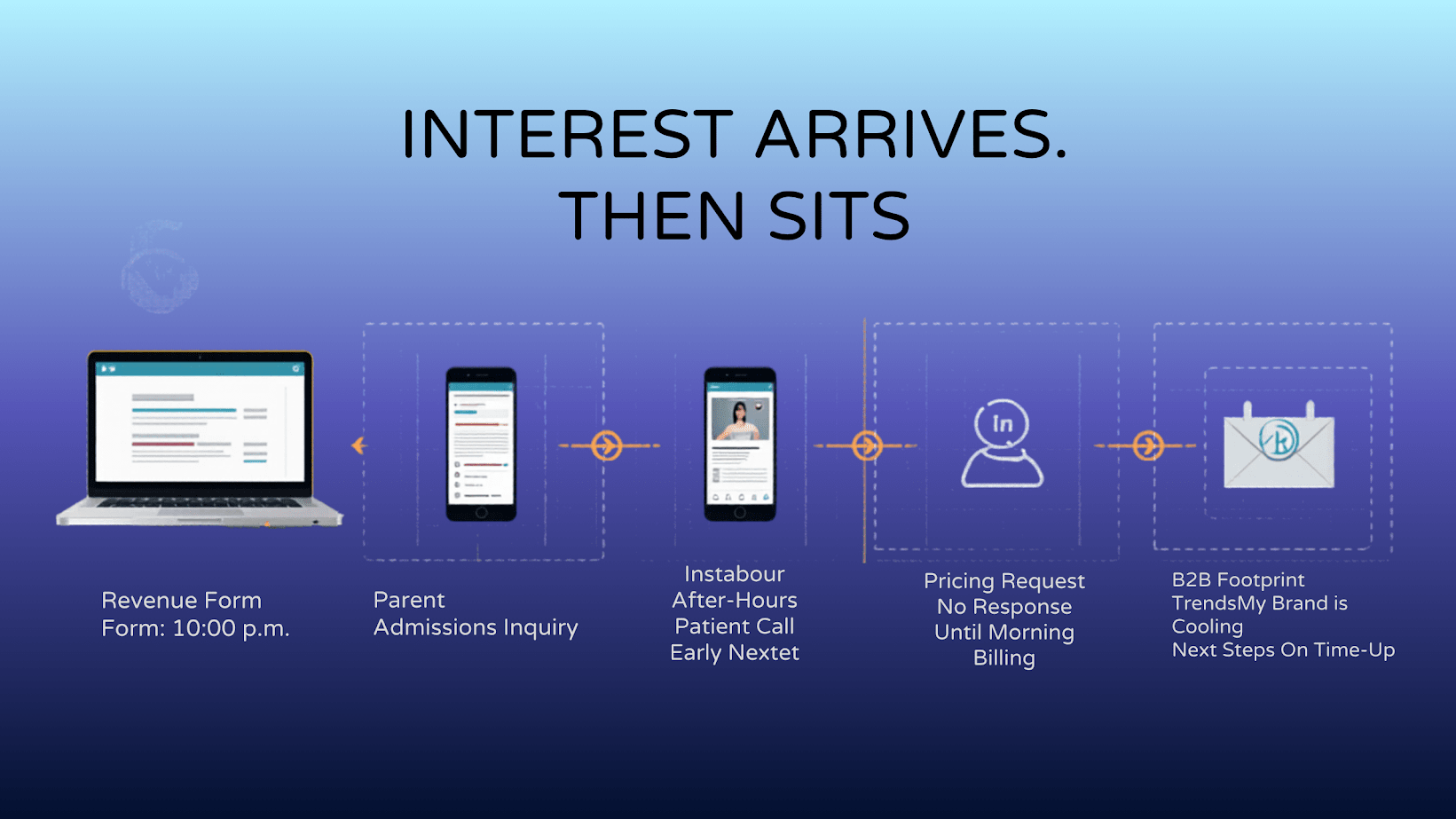
Most businesses do not lose revenue because nobody showed interest.
They lose revenue because interest arrives, then sits.
A prospect fills a website form at 10:40 p.m.
A parent sends a WhatsApp enquiry about admissions.
A real estate lead asks for a site visit on Instagram.
A patient calls after hours asking for the earliest appointment.
A B2B buyer wants pricing, but nobody responds until the next morning.
By then, the moment has already cooled.
This is why many companies think they have a top-of-funnel problem when they really have a workflow problem. They keep buying traffic, spending on ads, and pushing campaigns, but the real leakage happens between first inquiry and the next meaningful step.
That next step is usually one of four things:
-
qualification
-
routing
-
booking
-
follow-up
If those four steps are manual, delayed, or inconsistent, good leads still go cold.
That is where lead generation automation becomes commercially important.
Not “another chatbot.”
Not another form.
Not another autoresponder.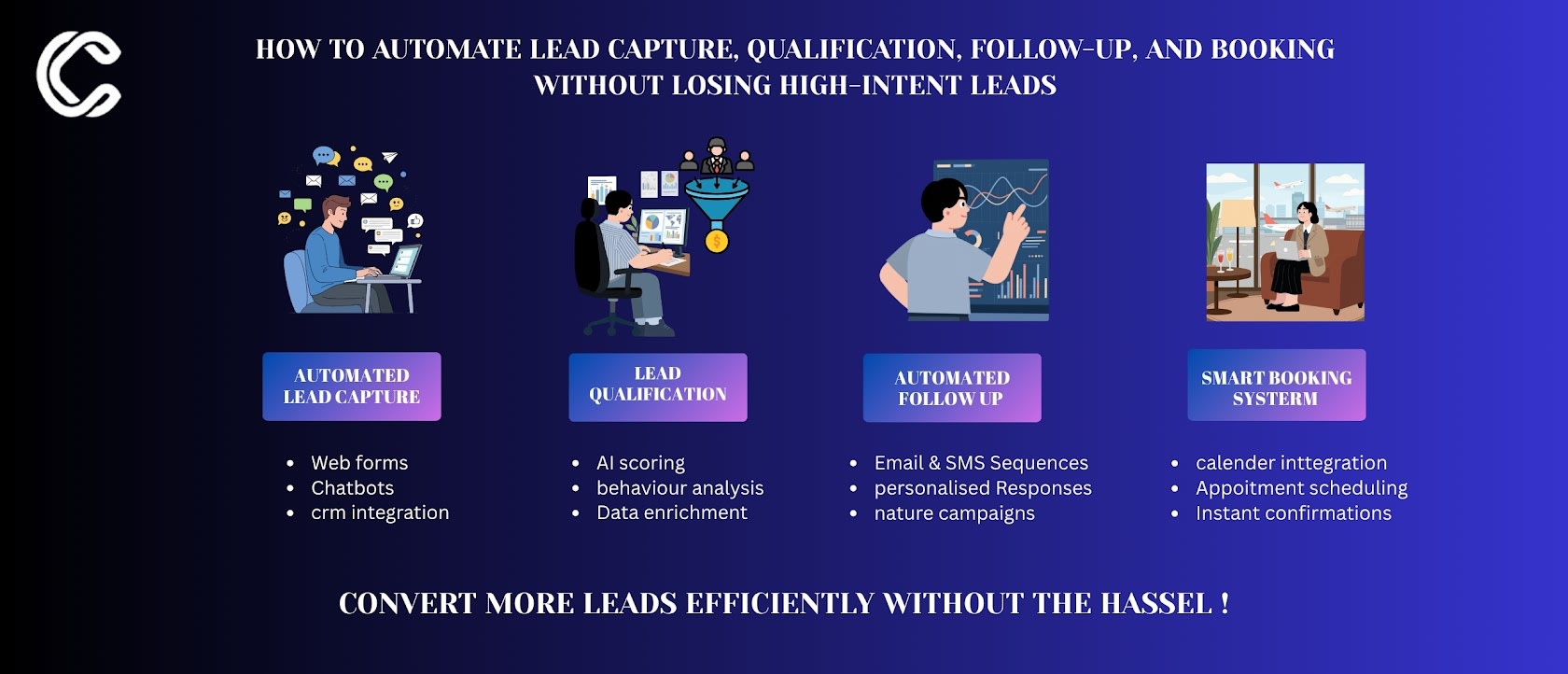
Real lead generation automation is the system that captures, qualifies, routes, follows up, and books across channels without letting high-intent demand disappear into operational gaps.
In this guide, you will learn how to design that workflow properly.
Why lead generation automation matters more than most teams think
A lot of businesses measure lead generation too early.
They celebrate:
-
clicks
-
inbound enquiries
-
form submissions
-
WhatsApp messages
-
campaign responses
But pipeline is not created at the moment of inquiry.
Pipeline is created when the inquiry becomes a structured next step.
That means:
-
the lead is captured with usable context
-
the right qualification questions are asked
-
the inquiry is routed correctly
-
a meeting, callback, test drive, site visit, consultation, or demo gets booked
-
the lead is followed up if they do not act immediately
Without this workflow, “lead generation” becomes lead accumulation.
And lead accumulation is not growth.
A strong automated lead workflow helps you:
-
respond faster across channels
-
reduce missed or forgotten enquiries
-
qualify before sales time is spent
-
move serious buyers to booking faster
-
reduce manual coordination
-
improve conversion from inquiry to meeting
-
create clearer visibility into where leads drop
In simple terms, automation matters because speed and structure convert interest into pipeline.
What lead generation automation actually means
Lead generation automation does not mean replacing sales teams
It means removing delay, inconsistency, and manual leakage from the early stages of the buyer journey.
A proper automation layer usually handles:
-
lead capture from website, WhatsApp, Instagram, chat, forms, and voice
-
intent recognition and guided qualification
-
lead scoring or lead-fit logic
-
routing to the right team, location, or workflow
-
meeting, appointment, or site-visit booking
-
reminders and follow-ups
-
CRM sync and reporting
-
human handoff with context when required
That is an important distinction.
A basic chatbot may answer questions.
A lead workflow automation system moves the buyer toward the next commercial milestone.
That is why businesses should stop asking, “Do we need a bot?”
The better question is:
“How should our high-intent lead journey move from inquiry to conversion?”
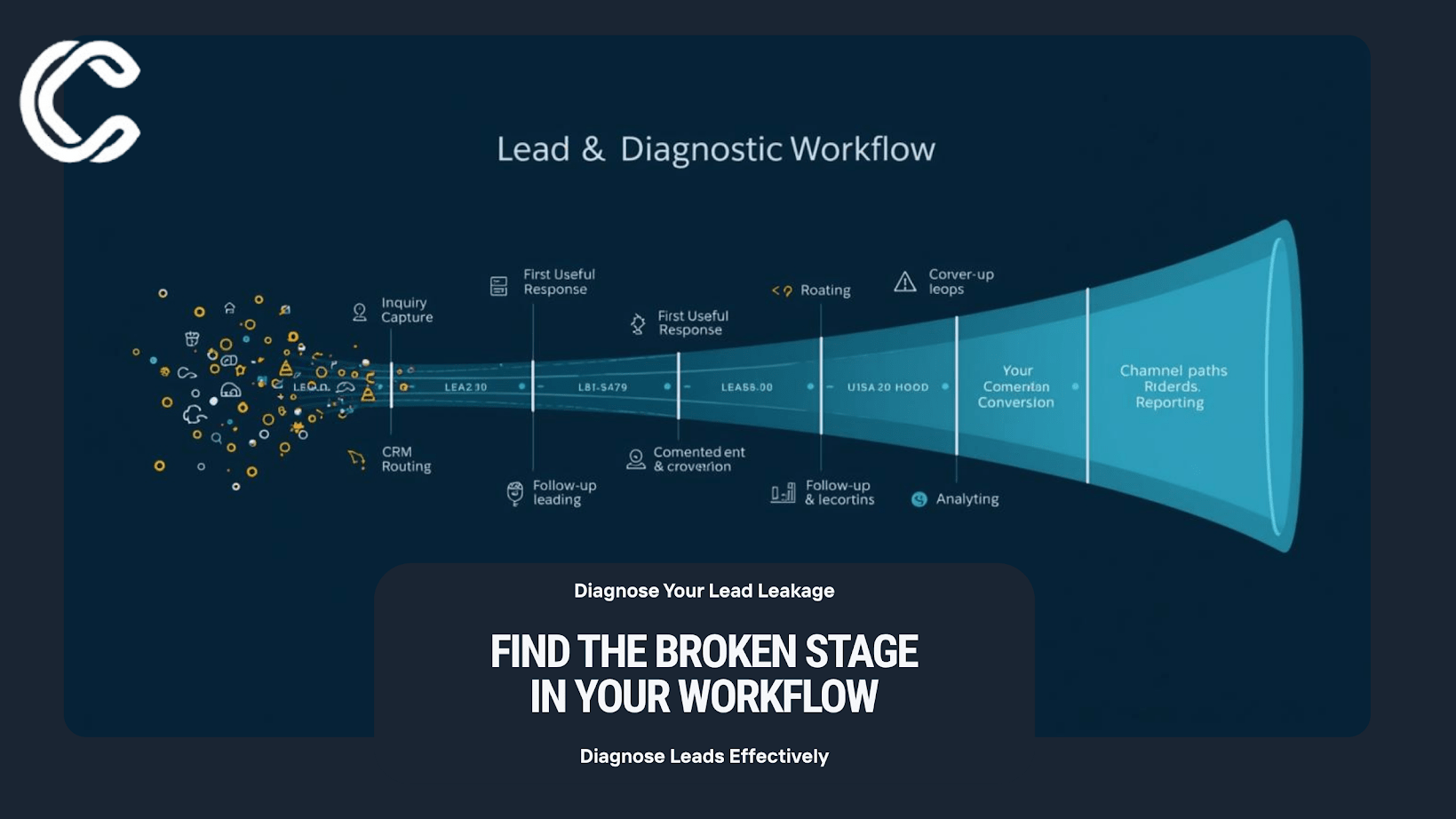
Where most leads leak before revenue ever sees them
Before fixing automation, identify the common leak points.
1. Slow first response
The lead arrives, but nobody responds in time.
2. Weak qualification
The business captures a name and phone number, but not the information sales actually needs.
3. Poor routing
The inquiry goes to the wrong rep, wrong branch, wrong team, or wrong queue.
4. No booking layer
The conversation happens, but the next step remains manual.
5. Inconsistent follow-up
Interested leads do not reply immediately, and nobody re-engages them with the right timing.
6. No cross-channel continuity
A customer starts on Instagram, moves to WhatsApp, then calls. The business loses context at every handoff.
7. No measurement
Teams know how many leads came in, but not how many became qualified, how many booked, or where they stalled.
Lead workflow automation exists to fix these exact points.
Step 1: Capture leads from every real buyer entry point
The first mistake businesses make is treating one channel as if it owns demand.
It usually does not.
Real demand often arrives through:
-
website chat
-
website forms
-
WhatsApp messages
-
Instagram DMs
-
inbound calls
-
landing pages
-
ad forms
-
QR campaigns
-
referral links
If your process only works well for one of these, you are already losing visibility.
A better setup centralizes capture while preserving channel context.
For example:
-
website visitors may need instant product guidance
-
WhatsApp leads may want fast answers and easy follow-up
-
Instagram leads may need low-friction conversion into consultation or booking
-
phone enquiries may need immediate qualification and callback scheduling
The goal is not to force every buyer into one channel.
The goal is to make sure every serious inquiry enters a structured lead workflow.
Step 2: Qualify before sales time gets wasted
Not every inquiry deserves the same human effort.
That does not mean ignoring people. It means structuring the buyer journey properly.
Good qualification logic helps answer:
-
What exactly is the lead looking for?
-
Which service, product, or location is relevant?
-
How urgent is the need?
-
Is the lead in the serviceable geography?
-
Is this a direct buyer, parent, patient, owner, procurement contact, or researcher?
-
What action should happen next?
Different businesses need different qualification depth.
Examples:
-
a clinic may ask specialty, preferred date, and new vs repeat patient status
-
a coaching centre may ask course interest, class level, city, and call preference
-
a real estate business may ask property type, budget range, and site-visit intent
-
a B2B SaaS team may ask company size, use case, and timeline
-
an auto showroom may ask vehicle model, city, and test-drive interest
The point is simple:
capture enough information to route and act intelligently, without creating friction so early that the lead abandons.
Step 3: Score or prioritize based on business logic
A lot of businesses treat all leads equally and then wonder why teams are overwhelmed.
Automation should help prioritize.
Priority can be based on:
-
urgency
-
intent signals
-
service fit
-
geography
-
product interest
-
channel source
-
return visitor behavior
-
time requested
-
repeat engagement
-
branch or territory rules
You do not always need a complicated AI model.
Sometimes the highest-value automation is just clear workflow logic:
-
send premium enquiries to the senior sales queue
-
route same-day appointment requests differently from general information requests
-
escalate hot leads who ask pricing, availability, or booking questions
-
send low-fit or incomplete leads into nurture instead of immediate sales assignment
This protects sales time and improves response quality.
Step 4: Route instantly to the right person, team, or branch
Poor routing kills momentum.
The lead may be genuine, but if it reaches the wrong person, the wrong department, or a generic shared inbox, the response slows down.
Routing logic should consider:
-
product or service category
-
geography or branch
-
language preference
-
working hours
-
team capacity
-
priority level
-
new vs existing customer status
For example:
-
a healthcare inquiry should reach the relevant specialty or booking desk
-
a real estate lead should reach the right project team
-
a B2B enterprise inquiry should not sit in the same queue as a low-fit SMB request
-
a multilingual market should not route Arabic or Hindi preference leads into an English-only follow-up flow
The faster the right person gets the right context, the better the conversion odds.
Step 5: Remove booking friction
A lead is not really progressing until the next commitment is scheduled.
That commitment may be:
-
a demo
-
a callback
-
a consultation
-
an appointment
-
a site visit
-
a test drive
-
a discovery session
-
a campus visit
-
a quote review
Many businesses still handle this manually.
That creates avoidable delays:
-
“Our team will call you”
-
“Please send your preferred time”
-
“Let me check availability”
-
“Can you message us tomorrow?”
-
“Our coordinator will get back to you”
Every extra step gives the lead a chance to disengage.
Booking automation reduces that friction by handling:
-
slot presentation
-
confirmation
-
reminders
-
rescheduling
-
no-show reduction
-
escalation when a human is needed
This is where conversations start turning into operational outcomes.
Step 6: Follow up without sounding robotic
Most leads do not convert on the first touch.
That is normal.
The mistake is assuming silence means no interest.
Many leads need:
-
another reminder
-
a clearer explanation
-
a better time slot
-
pricing context
-
a branch-specific answer
-
reassurance
-
a callback at the right time
Good follow-up automation is not spam.
It is structured persistence.
That means:
-
channel-aware follow-up
-
timing logic
-
interest-based messaging
-
reminders after incomplete booking
-
nudges after quotation
-
reactivation flows for paused leads
-
human escalation for hot but inactive prospects
A business that follows up well does not just look faster.
It looks more organized, more professional, and more trustworthy.
Step 7: Connect the workflow to your operating systems
Automation becomes much more valuable when it is not isolated.
The workflow should ideally sync with:
-
CRM
-
sales pipeline
-
calendars
-
helpdesk or ticketing
-
branch assignment logic
-
reporting dashboards
-
marketing tools
-
voice or messaging systems
Why this matters:
-
sales should not ask the same questions again
-
marketing should know which channels create qualified demand
-
operations should know what was promised
-
leaders should see where conversion drops
The real commercial value is not just faster response.
It is cleaner coordination.
Step 8: Measure the stages that actually affect pipeline
If you only track raw leads, you will misread performance.
Track:
-
inquiry volume by channel
-
response time
-
qualification completion rate
-
routing SLA
-
booking rate
-
no-show rate
-
follow-up response rate
-
inquiry-to-meeting conversion
-
meeting-to-sale conversion
-
channel-wise conversion quality
-
branch- or team-wise leakage
This tells you whether the issue is:
-
weak acquisition
-
weak qualification
-
weak routing
-
weak booking
-
weak follow-up
-
weak sales conversion after the meeting
That diagnosis matters because each problem needs a different fix.
What a strong first rollout looks like
Do not try to automate everything at once.
A better first rollout is:
-
pick one high-volume, high-value inquiry workflow
-
map current leak points
-
design qualification questions
-
define routing logic
-
add booking where appropriate
-
add follow-up logic for non-converted enquiries
-
measure for 30 days
-
refine before expanding to more channels or journeys
The best first workflows are usually:
-
demo booking
-
appointment booking
-
admissions enquiry handling
-
site-visit scheduling
-
inbound consultation requests
-
high-volume service enquiries
That is where time-to-value shows up fastest.
Common mistakes businesses make when automating lead workflows
1. They automate replies, not outcomes
A quick response is not enough if nothing meaningful happens next.
2. They qualify too little or too much
Too little creates weak sales handoffs. Too much creates drop-off.
3. They bolt channels together without shared context
The lead keeps repeating themselves and trust drops.
4. They ignore working-hour gaps
Nights, weekends, and holidays are often when high-intent leads get lost.
5. They measure activity, not progression
Messages sent are not the same as bookings created.
6. They treat automation like a marketing feature
It is really a revenue operations and customer journey system.
Conclusion
Most businesses do not need more disconnected lead tools.
They need a workflow that turns interest into action.
That is the difference between:
-
a chatbot and a lead system
-
a conversation and a conversion
-
traffic and pipeline
If your business is generating enquiries but still losing high-intent demand, the answer is usually not “run more campaigns first.”
The better answer is to fix the stages between inquiry and the next commitment.
Capture better.
Qualify better.
Route faster.
Book sooner.
Follow up with discipline.
That is how lead generation automation becomes revenue automation.
FAQ section
What is lead generation automation?
Lead generation automation is the use of AI and workflow logic to capture, qualify, route, follow up, and convert inbound demand into structured next steps such as meetings, appointments, site visits, or sales handoffs.
Is lead generation automation the same as a chatbot?
No. A chatbot may answer questions. Lead generation automation connects conversations to qualification, routing, booking, CRM updates, and follow-up actions that move the buyer journey forward.
Which channels should businesses automate first?
Start with the channels where high-intent demand already appears most often. For many businesses, that is website, WhatsApp, and phone. The right answer depends on buyer behavior and sales motion.
Can lead automation work for SMBs as well as enterprises?
Yes. SMBs benefit from faster response and reduced missed leads. Enterprises benefit from governed workflows, routing logic, integrations, auditability, and scale across branches or teams.
What should businesses track after rollout?
Track response time, qualification rate, booking rate, follow-up response rate, inquiry-to-meeting conversion, no-show rate, and channel-wise lead quality.
About the Author

Md Ashik Alam
Ready to orchestrate your AI future?
Converiqo.AI helps you design, deploy, and scale automation workflows that move your business faster. Connect with our team to see the platform in action and co-create the next chapter of intelligent operations.
Read More Blogs
Discover more insights and product updates curated by the Converiqo.AI team.
Website Chatbot vs WhatsApp Bot vs AI Voicebot: Which Converts Better for Lead Generation?
Compare website chatbots, WhatsApp bots, and AI voicebots for lead generation. Learn which channel converts better by use case, urgency, and buyer behavior.
Why High-Intent Leads Still Go Cold After the First Inquiry
Learn why high-intent leads go cold after the first inquiry and what to fix in response speed, qualification, routing, booking, and follow-up.

How to Automate Lead Generation with AI for Faster Conversions
Learn how to automate lead generation with AI for faster conversions. Discover how AI improves lead capture, qualification, routing, and follow-up for modern businesses.