Unified Platform vs Multiple SaaS
Discover why unified intelligence triumphs over fragmented complexity in enterprise AI automation.
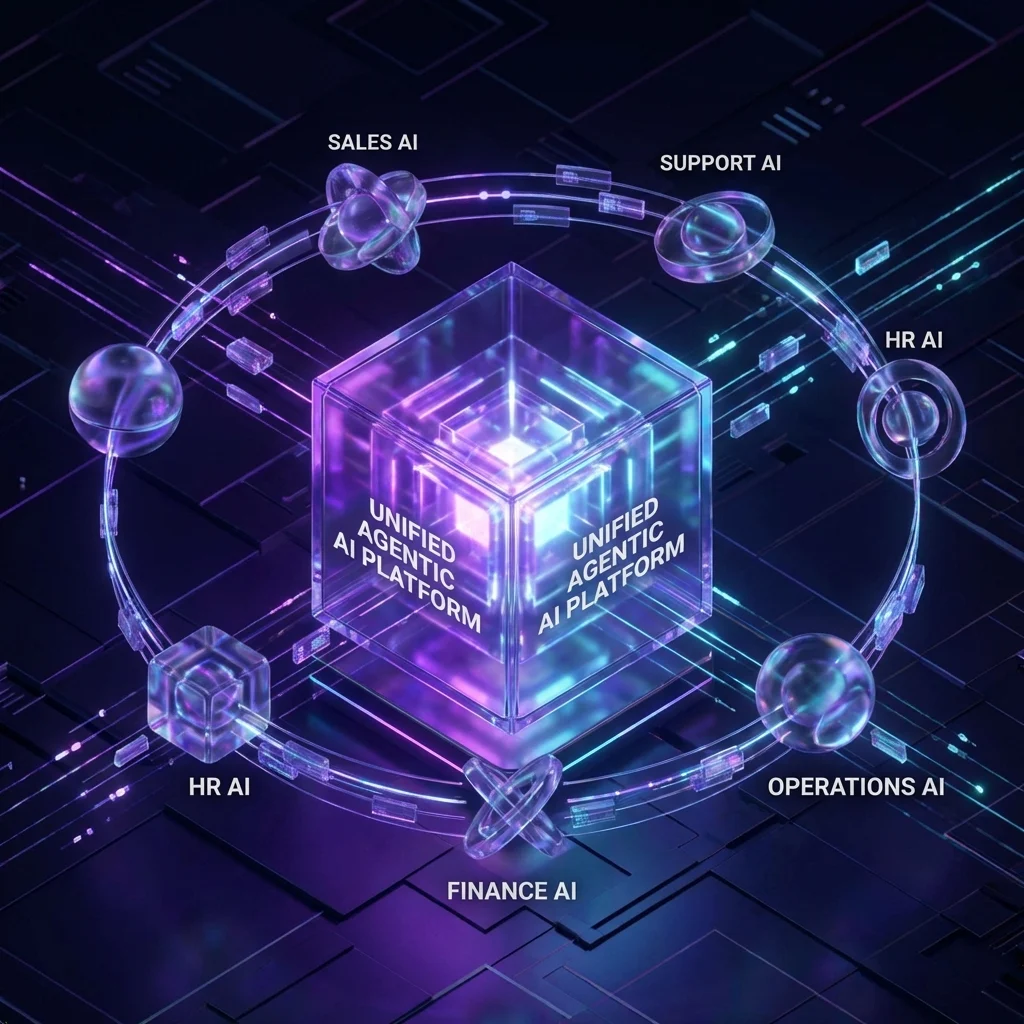
Who Wins for What Situation?
Choose the right platform strategy for your enterprise scale
Unified AI BOT Platform emerges as the clear winner for enterprises seeking comprehensive automation, centralized governance, and scalable AI across diverse functions with seamless integration and holistic operational view.
Multiple SaaS Tools conversely are best suited for smaller businesses or isolated departmental needs where quick, specialized solutions are prioritized over comprehensive integration and centralized management.
Key Decision Criteria
Understanding the critical factors that determine which approach is right for your organization
Integration & Data Flow
Unified Platform:
Seamless, native integrations across enterprise systems; unified data view, reduced silos.
Multiple SaaS Tools:
Point-to-point integrations often required; data silos persist; increased integration complexity.
Governance & Security
Unified Platform:
Centralized, consistent security policies, audit trails, and compliance across all AI operations.
Multiple SaaS Tools:
Fragmented security postures; varied compliance standards; increased attack surface.
Scalability & Management
Unified Platform:
Effortless scalability for diverse use cases; centralized management and oversight.
Multiple SaaS Tools:
Scaling individual tools can be complex; decentralized management leads to operational overhead.
Total Cost of Ownership (TCO)
Unified Platform:
Lower long-term TCO due to vendor consolidation, reduced integration costs, and efficiency gains.
Multiple SaaS Tools:
Higher TCO from multiple subscriptions, integration development, and operational overhead.
User & Employee Experience
Unified Platform:
Consistent, intuitive experience across all AI interactions; reduces tool fatigue.
Multiple SaaS Tools:
Inconsistent interfaces; frequent context switching; potential for tool fatigue.
Innovation & Adaptability
Unified Platform:
Rapid development of new AI capabilities leveraging shared components and data.
Multiple SaaS Tools:
Innovation tied to individual tool roadmaps; slower to adapt to cross-functional needs.
Architecture Comparison
Understanding the fundamental architectural differences between unified and fragmented approaches
Unified AI BOT Platform Architecture
- Centralized AI Engine: Powers all agents, RAG, and NLP across the platform with unified intelligence and coordination.
- Unified Orchestration Layer: Manages and coordinates complex workflows across all integrated systems for seamless automation.
- Shared Knowledge Base: A single source of truth for all enterprise data, accessible by all AI agents and systems.
- Native Integration Hub: Provides pre-built connectors and flexible APIs for seamless connection to CRMs, ERPs, ITSM, and custom applications.
- Centralized Governance & Security: Enforces policies, audit trails, and access controls from a single point across all operations.
Multiple SaaS Tools Architecture
- Disparate AI Engines: Each tool may have its own AI/NLP capabilities, often limited to its specific function and use case requirements.
- Point-to-Point Integrations: Requires custom integrations between each tool, leading to complexity and fragility in connections and maintenance.
- Fragmented Data Sources: Information is siloed within individual applications, making a holistic view difficult across systems.
- Decentralized Governance: Security and compliance policies vary across tools, increasing risk and management overhead.
- Inconsistent User Experience: Different interfaces and workflows across tools create training overhead and user frustration.
When to Choose Which Approach
Choose Unified AI BOT Platform When:
- You need comprehensive, end-to-end automation across your entire enterprise with unified intelligence and coordination.
- Centralized governance, security, and auditability are critical for your organization's compliance and risk management.
- You want to eliminate data silos and achieve a holistic view of operations across all departments and functions.
- You need to rapidly scale AI automation and deploy new capabilities efficiently and effectively across the organization.
- Reducing TCO, vendor sprawl, and integration complexities are key priorities for long-term operational efficiency.
Choose Multiple SaaS Tools When:
- Your needs are highly niche and can be met by specialized, isolated tools without requiring comprehensive integration.
- Budget is extremely limited for initial setup, and quick, simple deployments are prioritized over long-term scalability.
- You have minimal integration requirements between different departmental functions and can operate independently.
- Data silos are not a significant concern for your current operational scale and business requirements.
- You are comfortable managing multiple vendor relationships and disparate systems with separate maintenance and support.
Frequently Asked Questions
Common questions comparing a unified AI platform to using multiple SaaS tools.
What are the main drawbacks of using multiple SaaS tools for automation?
+
Managing multiple SaaS tools for automation often leads to several drawbacks, including data silos that hinder a holistic view of operations, integration complexities that require significant development effort, inconsistent user experiences across different platforms, increased security risks due to varied compliance standards, and higher operational costs from managing multiple vendor contracts and licenses. This fragmented approach can reduce overall efficiency and slow down digital transformation initiatives, making it challenging to scale automation effectively across the enterprise.
How does a unified AI BOT platform overcome these challenges?
+
A unified AI BOT platform like Converiqo addresses these challenges by providing a single, integrated environment where all automation, AI agents, and conversational interfaces reside. This eliminates data silos, centralizes governance and security, streamlines integration efforts with existing enterprise systems, and ensures a consistent user experience. It reduces total cost of ownership by consolidating vendors and offers a holistic view of operations, enabling organizations to scale automation more efficiently and achieve comprehensive digital transformation with greater agility and control.
Does a unified platform limit flexibility or choice compared to specialized SaaS tools?
+
While specialized SaaS tools might offer deep, narrow functionalities for specific tasks, a unified AI BOT platform like Converiqo provides broad capabilities and extensibility through its modular architecture and robust API framework. This means enterprises gain the core benefits of integration and governance without sacrificing flexibility. Converiqo allows for customization and the addition of specific functionalities as needed, often leveraging its underlying AI and orchestration engine to adapt quickly to new requirements. It focuses on unified intelligence rather than limiting capabilities.
What are the cost implications of each approach?
+
The cost implications vary significantly. Using multiple SaaS tools often involves numerous subscriptions, hidden integration costs, and increased overhead for managing diverse vendor relationships, leading to a higher total cost of ownership (TCO) in the long run. A unified AI BOT platform typically involves a single vendor and a more predictable cost structure, with initial investments offset by substantial savings from streamlined operations, reduced integration complexities, and greater efficiency. This consolidation drives better long-term ROI and simplifies budgeting for AI initiatives.
How does data governance and security differ?
+
With multiple SaaS tools, data governance and security become fragmented, as each tool has its own policies, access controls, and compliance certifications. This creates challenges in ensuring consistent data protection and auditability across the enterprise. A unified AI BOT platform centralizes data governance, offering a single point of control for security policies, access management, audit trails, and compliance with regulations like GDPR and HIPAA. This provides a far more robust and transparent security posture, critical for sensitive enterprise data and regulated industries.
What about integration complexity?
+
Integration is a major point of divergence. Multiple SaaS tools almost always require complex, point-to-point integrations that are difficult to build, maintain, and scale, often leading to brittle systems and high development costs. A unified AI BOT platform is designed with native integration capabilities and a flexible API framework, allowing seamless connection to existing enterprise systems (CRMs, ERPs, ITSM) with pre-built connectors. This drastically reduces integration complexity, accelerates deployment, and ensures data flows smoothly across the entire technology stack.
How does a unified platform improve employee experience?
+
A unified platform significantly improves employee experience by providing a single, consistent interface for interacting with AI-powered automation across various functions. This reduces cognitive load, eliminates the need to switch between multiple applications, and offers a more intuitive and efficient way to access information, automate tasks, and collaborate. Employees benefit from streamlined workflows, faster access to resources, and less frustration, which boosts productivity and job satisfaction. In contrast, managing multiple SaaS tools often leads to tool fatigue and inefficiencies.
Can a unified platform support all enterprise automation needs?
+
Yes, a well-designed unified AI BOT platform like Converiqo is built to support a wide range of enterprise automation needs, from customer service and lead generation to HR and IT operations. Its modular and extensible architecture, combined with a powerful AI and orchestration engine, allows it to be configured for diverse use cases. While specialized SaaS tools might offer niche features, a unified platform provides the foundational capabilities and flexibility to build and scale comprehensive automation solutions across the entire organization, reducing the need for an overwhelming number of disparate tools.
Ready for Unified Power?
Stop juggling multiple tools. Experience the efficiency of a single, integrated AI BOT platform.