Enterprise AI BOT
Architecture
Explore the multi-layered architecture of enterprise AI bots. Understand how the Cognitive, Integration, and Security layers work together to deliver scalable automation.
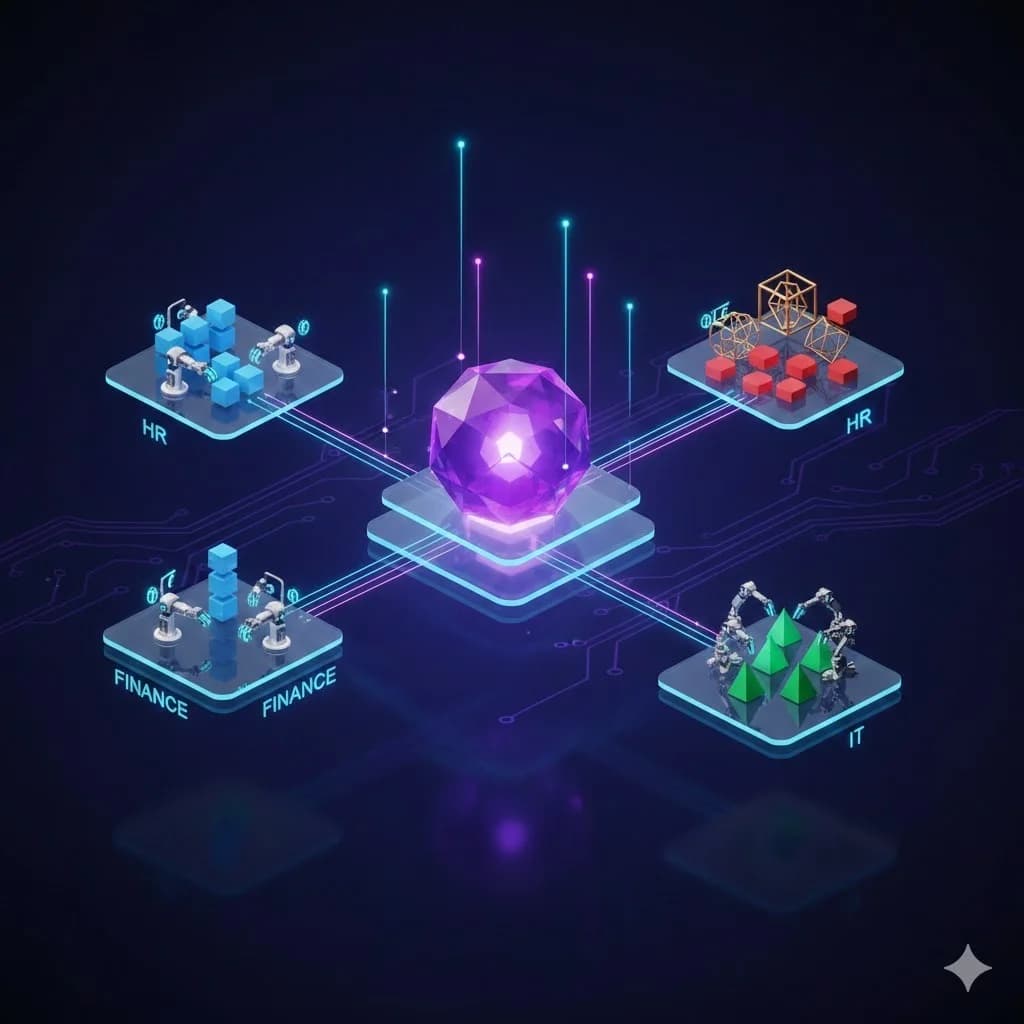

Systems Engineering
Scalable Modular Design
What is
Enterprise AI Architecture?
Enterprise AI BOT architecture is a multi-layered, modular system designed for scalability, security, and high performance within complex business environments.
It encompasses foundational layers for data ingestion and knowledge management (often RAG-based), a core orchestration engine that manages AI agents, and application layers for business functions. This structure ensures reliability, compliance, and optimal efficiency.
How It Works: Core Mechanisms
Understanding the fundamental building blocks of enterprise AI BOT architecture
Data Ingestion & Pre-processing
Collects, cleans, and transforms raw enterprise data into a structured format suitable for AI processing and knowledge bases.
Knowledge Base & Vector Store
Organizes and stores both structured and unstructured data, often using vector embeddings for efficient semantic search (RAG).
AI Agent Orchestration
A central engine that manages the lifecycle of various AI agents, dispatches tasks, and coordinates their interactions to achieve complex goals.
Specialized AI Agents
Modular AI components, each designed to perform specific tasks such as data analysis, natural language generation, decision-making, or system interactions.
External System Integrations
APIs and connectors that enable seamless bidirectional communication and data exchange with existing enterprise applications (CRM, ERP, etc.).
Security & Compliance Layer
Embeds robust security protocols (authentication, authorization, encryption) and compliance checks throughout the architecture.
Monitoring & Feedback Loop
Continuously tracks AI performance, identifies anomalies, gathers user feedback, and drives iterative improvements to the system.
Architectural Layers & Components
Understanding how architectural decisions influence total cost of ownership
A well-designed Enterprise AI BOT architecture divides functionality into distinct layers: a Data Foundation for knowledge, a Core Intelligence layer for LLMs/RAG, an Orchestration layer for workflow, and an Integration layer for connectivity.
Key Architectural Layers
- Data Foundation Layer: Handles data ingestion, storage (vector databases), and pre-processing for all AI operations.
- Core Intelligence Layer: Encompasses LLMs, RAG systems, and specialized AI agents responsible for reasoning and generation.
- Orchestration & Workflow Layer: Manages task decomposition, agent coordination, and the flow of automated business processes.
- Integration & API Layer: Provides secure and efficient connectivity with all internal and external enterprise applications.
- User Interface & Experience Layer: Front-end components for user interaction, management dashboards, and monitoring tools.
- Governance, Security & Operations Layer: Cross-cutting concerns including access control, auditing, compliance, and continuous operational monitoring.

Mental Model: Digital Nervous System
Envision the enterprise AI BOT architecture as a sophisticated digital nervous system, where each component (neuron) specializes in a function, collectively processing information, making decisions, and executing actions across the entire organizational body.
Enterprise Considerations
Understanding the transformative benefits and implementation considerations
When designing and deploying enterprise AI BOT architectures, several key considerations are paramount to ensure success. Scalability is crucial to handle fluctuating demands and growth. Security must be baked in from the ground up, protecting sensitive data and intellectual property.
Explore Related Topics
Unified Agentic AI BOT Platform
Enterprise AI Bot Architecture Explained
Agentic AI vs. Prompt-Based Chatbots
Customer Self-Service Automation
Employee Self-Service Automation
Industries
Enterprise AI vs. CPaaS
Common Architectural Pitfalls
- Lack of clear separation between AI models and business logic.
- Underestimating the complexity of data integration.
- Ignoring scalability requirements during initial design.
- Insufficient security measures at API endpoints.
- Failing to implement robust monitoring for AI performance.

Fortified Architecture
Our architecture embeds rigorous security protocols at every layer. From role-based access control (RBAC) to end-to-end encryption, we ensure your enterprise data remains resilient against threats while maintaining full compliance.
RBAC
Strict access controls.
Audit Logs
Full traceability.
Architectural Governance & Best Practices
Governance and optimization strategies for enterprise AI BOT architecture
Controls
API Security & Access Management
+
Implement OAuth, API keys, and granular permissions for all internal and external integrations.
Data Pipeline Integrity Checks
+
Automated validation and monitoring at each stage of data ingestion and processing to prevent corruption.
Containerization & Orchestration (e.g., Kubernetes)
+
Utilize modern DevOps practices for consistent deployment, scaling, and management of AI components.
Disaster Recovery & Business Continuity Planning
+
Establish robust backup, recovery, and failover strategies to ensure continuous AI service availability.
Performance Benchmarking & Optimization
+
Regularly test and tune the architecture for latency, throughput, and resource utilization to meet SLAs.
Risks
Architectural Sprawl & Complexity
Overly complex architectures can become difficult to manage, maintain, and troubleshoot, leading to increased operational costs.
Performance Bottlenecks
Inefficient design or scaling issues in any layer can lead to slow response times, impacting user experience and business operations.
Vendor Lock-in
Reliance on proprietary technologies or cloud providers can limit flexibility and increase long-term costs.
Security Vulnerabilities in Integration Points
Each integration point introduces a potential attack surface if not adequately secured and monitored.
Data Silos & Inconsistent Information
Poor data architecture can result in fragmented knowledge, hindering AI's ability to provide comprehensive and accurate responses.
Mitigations
Modular Microservices Design
Break down the architecture into small, independent, and loosely coupled services to enhance manageability, scalability, and resilience.
Cloud-Native & Serverless Computing
Leverage cloud services for automatic scaling, reduced operational overhead, and increased availability without managing underlying infrastructure.
Open Standards & API-First Approach
Prioritize open standards and well-documented APIs to minimize vendor lock-in and facilitate easier integration and portability.
Zero-Trust Security & API Gateway Protection
Implement a zero-trust model and deploy API gateways with advanced threat protection to secure all integration endpoints.
Unified Data Fabric & Semantic Layer
Create a cohesive data strategy that breaks down silos and provides a consistent, semantic view of enterprise information for AI consumption.
Architect Your AI Future
Discover how Converiqo AI helps build resilient, scalable enterprise AI architectures that drive real business impact.
References, Sources & Empirical Evidence
Academic & Industry Citations
- “Designing Multi-Agent Systems in Practice” — IEEE Software / Industry Benchmarks (2023)
Best practices in software engineering for multi-agent coordination, database isolation, and state management.